In a recent article, I have explained the Euler’s method for solving ordinary differential equations using as a motivation the fictionalized version in the film Hidden Figures of the scientific contribution of Katherine Goble and her two colleagues to the NASA space program. As an example of application, I have also shown a program written in the awk programming language for calculating the orbits of planets of the solar system. However, my interest in astrodynamics come back to my juvenile age, when still going to high school, my parents decided to gift me a more sophisticated microcomputer than my previous one (the celebrated Commodore VIC 20). So I became a programmer of a Philips MSX VG 8010 that I still jealously own in its original box. So, powered by the versatile Federico Faggin’s Zilog Z80 processor with a clock 3.58 MHz, with an impressive (for a previous owner of a VIC20 with a mere 3.583 kB!) memory of 32 kB RAM , 16kB of video RAM and a dedicated tape-record device as storage system, I started to write more sophisticated in MSX Basic. At that time, I was eagerly following the department “Ricreazioni al Computer” by the famous computer scientist A. K. Dewdney on the magazine “Le Scienze”, the Italian edition of Scientific American. The new microcomputer allowed me to experiment with the fascinating computational topics that Dewdney was offering every month. One of these topics was dedicated to the simulation of stars using the algorithm based on the Euler integration of the Newton equation. Following the instruction of Dewdney, I managed to write a small program in MSX basic and this was the starting of my interest in computational astronomy.
Continue readingProgramming

The Logistic Map and the Feigenbaum Constants: a Retro Programming Inspired Excursion
“… Mitchell Feigenbaum was an unusual case. He had exactly one published article to his name, and he was working on nothing that seemed to have any particular promise. His hair was a ragged mane, sweeping back from his wide brow in the style of busts of German composers… At the age of twenty he had already become a savant among savants, an ad hoc consultant [at Los Alamos National Laboratory, USA] whom scientist would go to see about any expecially intractable problem.”
James Gleick, Chaos: the amazing science of the unpredectable.
This year, on June 30th 2019, Mitchell J. Feigenbaum died at the age of 74. Feigenbaum was an American mathematician that became famous with the discovery of the universal constants that bear his name. In the middle of the ’80, reading Le Scienze magazine (the Italian edition of Scientific American) I got to know of the contribution to the chaos theory of this charismatic mathematician. In particular, I was delighted by reading the Douglas Hofstadter’s article in the rubric “Temi Metamagici” ( Methamagical themes) (Scientific American, November 1981). The article explained the emergence of the chaos in the iteration map of the logistic equation, the same equation deeply studied by Feigenbaum. The full story about the Mitchell Feigenbaum and his discovery of his universal constants is delightly narrated in the beautiful book Chaos:the amazing science of the unpredectable by J. Gleick [1]. Here it is just another small extract:
Continue reading“… in the summer of 1975, at a gathering in Aspen, Colorado, he heard Steve Smale [another key mathematicial in the developing of the chaos theory, NDA] talk about some of the mathematical qualities of the same quadratic difference equation [the same studied by Robert May, NDA]. Smale seemed to think that there were some interesting open questions about the exact point at which the mapping changes from periodic to chaotic. As always, Smale had a sharp instinct for questions worth exploring. Feigenbaum decided to look into it once more.”[1]
Share this:

Numerical Integration of Differential Equations. Part I.: Katherine Johnson and the Euler’s Method.
This article was inspired by the beautiful 2016 movie Hidden Figures (based on the book of the same name by M. L. Shetterley) which tell the dramatic story of three talented black women scientist that worked as “human computers” for NASA in 1961 for the Mercury project.
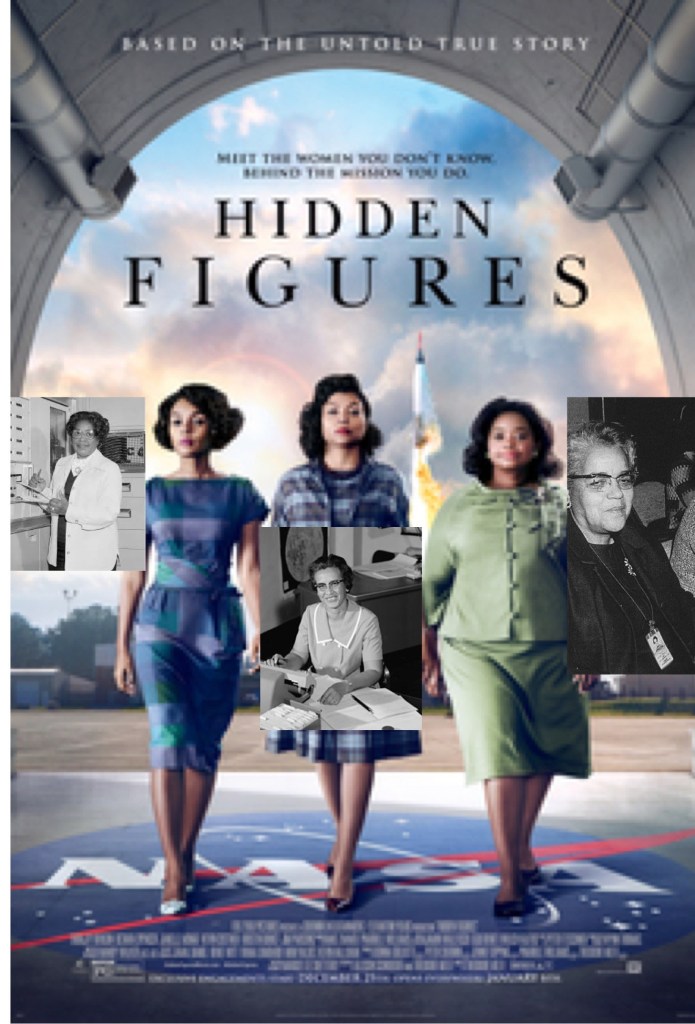
In the movie, the mathematician Creola Katherine Johnson (or Globe) (interpreted by Taraji P. Henson), had a brilliant intuition on how to numerically solve the complex problem to find the transfer trajectory for the reentry into the Earth atmosphere of the Friendship 7 capsule with the astronaut John Glenn on board. In the particular scene, she was standing together with other engineers and the director of the Langley Research Center (a fictional character interpreted by Kevin Coster) in front of the vast blackboard looking to graph and equations when she says that the solution might be in the “old math” and she runs to take an old book from a bookshelf with the description of the Euler method [UPDATE, May 2022: I just come across another excellent youtube video by the Tibees about the mathematical work of K. Johnson at NASA, and at the end of the video she reveal that the book shown in the movie is the classic H Margenau & G. M Murphy, The Mathematics of Physics and Chemistry. Published by Van Nostrand, 1956]. The scene is also nicely described in the youtube video lesson by Prof. Alan Garfinkel of the UCLA. A detailed description of the numerical solution based on the original derivation of K. Johnson is in the Wolfram blog website.
Katherine Globe was using for these complex calculation her brilliant brain with the support of a mechanical calculator (the Friden STW-10, in the movie, this machine is visible in different scenes). In a scene of the film, she revealed that her typical computing performance was of 10000 calculations per day and probably for calculations, she was not referring to single arithmetic operations! These exceptional mathematical skills have given a significative contribution at the beginning of the American space program, but it became insufficient to handle the more complex mathematics necessary to land the man on the Moon, and the other fantastic NASA achievements.
Continue readingShare this:

The Lissajous-Bowditch Curves
Try to glue a small mirror to the end of a bent piece of wire fixed to a stable platform and let the laser beam of a laser pointer reflect on it. Entangled spires of an ephemeral red dragon will perform a hypnotic dance on the wall of your room. This voluptuous dance results from two mutually perpendicular harmonic oscillations produced by the oscillations of the elastic wire.
The curved patterns are called Lissajous-Bowditch figures and named after the French physicist Jules Antoine Lissajous who did a detailed study of them (published in his Mémoire sur l’étude optique des mouvements vibratoires, 1857). The American mathematician Nathaniel Bowditch (1773 – 1838) conducted earlier and independent studies on the same curves and for this reason, the figures are also called Lissajous-Bowditch curves. Lissajous invented different mechanical devices consisting of two mirrors attached to two oriented diapasons (or other oscillators) by double reflecting a collimated ray of light on a screen, produce these figures upon oscillations of the diapasons. The diapason can be substituted with elastic wires, speakers, pendulum or electronic circuits. In the last case, the light is the electron beam of a cathodic tube (or its digital equivalent) of an oscilloscope. This article is about the mathematical theory behind these curves introduced with a demonstration program and an example of education application proposed in 1827 by C. Wheatstone . Finally, we will give a look to the equivalent of the L-B curves in 3D by exploring the spherical L-B curves.
Continue readingShare this:

Calculus in a Nutshell: Functions and their Derivatives
When I was about thirteen, the library was going to get ‘Calculus for the Practical Man.’ By this time I knew, from reading the encyclopedia, that calculus was an important and interesting subject, and I ought to learn it.
Richard P. Feynman, from What Do You Care What Other People Think?
Introduction
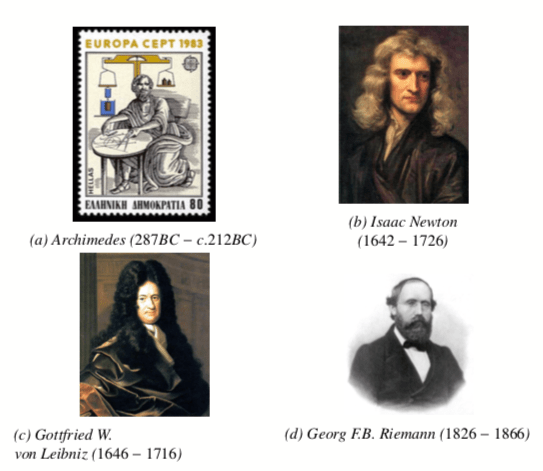
Calculus is an important branch of mathematics that deals with the methods for calculating derivatives and integrals of functions and using this information to study the properties of functions. It was independently invented by I. Newton and W. Leibniz in the 18
It comprises two areas:
- Differential calculus
It concerns the study of the rate of variation of functions.
- Integral calculus
Depending on the nature of the functions involved in the calculations, we can further distinguish between the single- and multi-variable calculus. In this chapter, the main concepts and methods of the single-variable calculus are summarised.
Continue readingShare this:

The Fourier Transform
Pure mathematics is much more than an armory of tools and techniques for the applied mathematician. On the other hand, the pure mathematician has ever been grateful to applied mathematics for stimulus and inspiration. From the vibrations of the violin string they have drawn enchanting harmonies of Fourier Series, and to study the triode valve they have invented a whole theory of non-linear oscillations.
George Frederick James Temple In 100 Years of Mathematics: a Personal Viewpoint (1981).
The Fourier Transform (FT) is an integral transform, a powerful mathematical tool to map a function from its original space representation into another function space (called, in this case, the Fourier space). In the time domain, the Fourier space is the frequency and in the Cartesian domain is the so-called reciprocal space. The FT is accomplished by integrating the given function in its original space. The advantage of the FT is that in the transformed space, the properties of the original function can usually be characterised and manipulated more quickly than in the original function space. The FT function can generally be mapped back to the original function space using the inverse FT.
The FT plays an important role in pure and applied science, computer science, electronic engineering, and medicine. In this lecture, I will shortly introduce the mathematics of the FT and then show some examples of practical applications.
Continue readingShare this:

The Fourier Series
Pure mathematics is much more than an armory of tools and techniques for the applied mathematician. On the other hand, the pure mathematician has ever been grateful to applied mathematics for stimulus and inspiration. From the vibrations of the violin string they have drawn enchanting harmonies of Fourier Series, and to study the triode valve they have invented a whole theory of non-linear oscillations.
George Frederick James Temple In 100 Years of Mathematics: a Personal Viewpoint (1981).
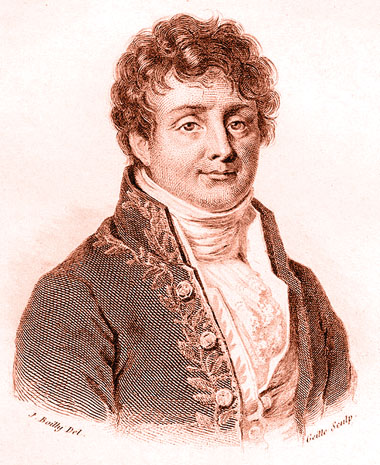
The Fourier Series is a very important mathematics tool discovered by Jean-Baptiste Joseph Fourier in the 18th century. The Fourier series is used in many important areas of science and engineering. They are used to give an analytical approximate description of complex periodic function or series of data. In this blog, I am going to give a short introduction to it.
Continue readingShare this:

La Serie di Taylor
La serie di Taylor è un utilissimo strumento matematico. In questo blog, ne darò una breve descrizione dando qualche esempio di applicazione.
Chi è il signor Taylor?
Brook Taylor (1685 – 1731) era un matematico britannico del XVII secolo che ha dimostrato la formula che porta il suo nome, e l’argomento di questo blog, nel volume Methodus Incrementorum Directa et Inversa (1715). Maggiori informazioni si possono trovare nella corrispondente pagina della wikipedia.
Continue readingShare this:

The Taylor Series
The Taylor series is a mathematical tool that, sometimes, it is not easy to immediately grasp by freshman students. In this blog, I will give a short review of it giving some examples of applications.
Who is Mr. Taylor?
Brook Taylor (1685 – 1731) was a 17th-century British mathematician. He demonstrated the celebrated Taylor formula, the topics of this blog, in his masterwork Methodus Incrementorum Directa et Inversa (1715). For more information, just give a read to the following wiki page.
Continue readingShare this:

Modelling Natural Pattens and Forms I: Sunflowers Florets and the Golden Ratio
Continue readingIl girasole piega a occidente
e già precipita il giorno nel suo
occhio in rovina …
from the poem “Quasi un madrigale” by Salvatore Quasimodo.

 daniloroccatano.blog