Rediscovering Halometry with Raspberry Pi and Laser Diffraction

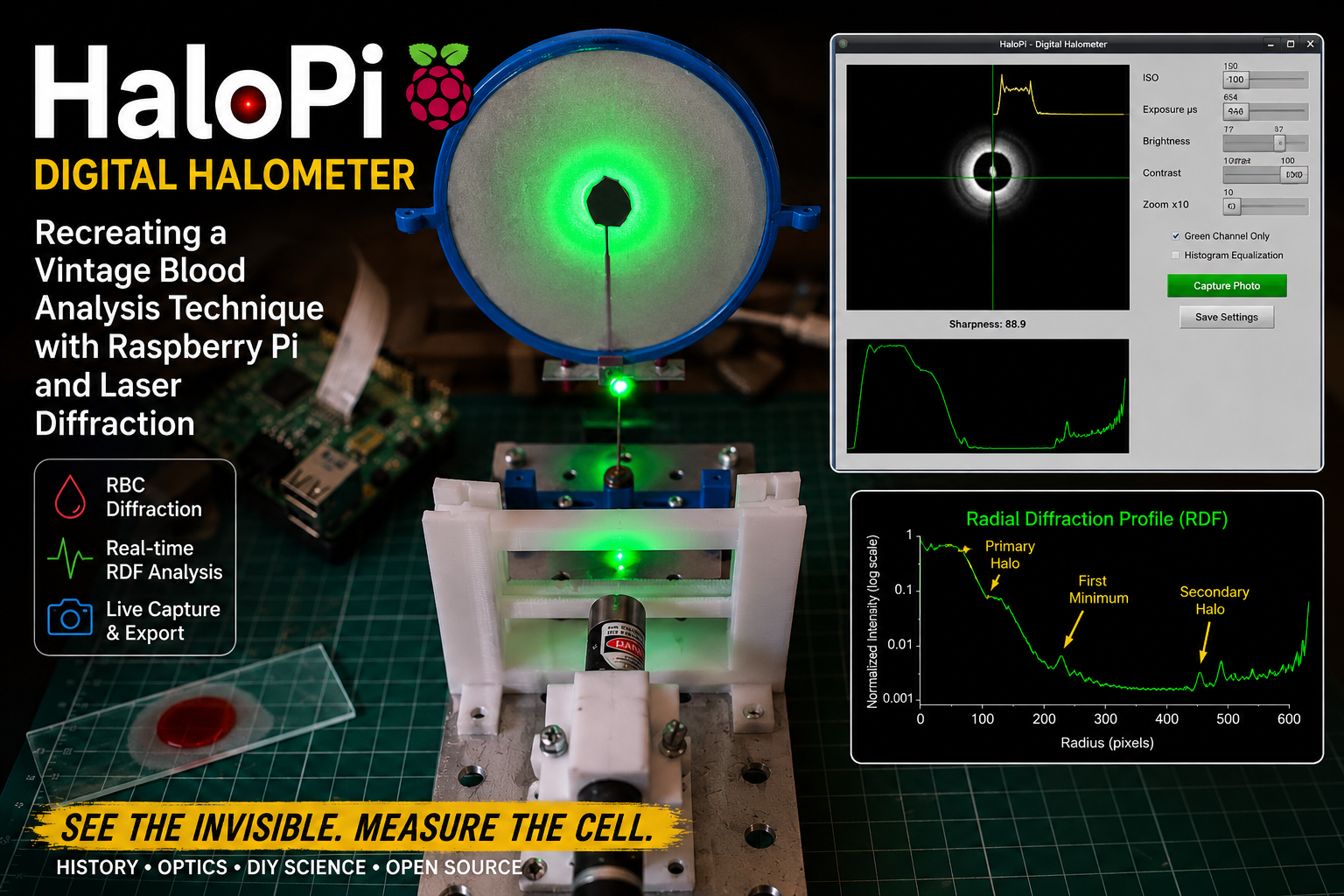
One of the aspects of experimental science that I find most fascinating is the rediscovery of historical scientific instruments and techniques that have gradually disappeared from modern laboratories. In my latest Instructable project, I explored the reconstruction of a remarkable optical device once used in hematology during the early twentieth century: the halometer.

Before the advent of automated blood analyzers and digital microscopy, researchers investigated ingenious indirect methods for estimating the average size of red blood cells. One of these methods relied on diffraction phenomena produced when coherent light passed through thin blood smears. The resulting circular halos could be related to the average diameter of erythrocytes, providing a rapid—although approximate—diagnostic technique for conditions such as pernicious anemia.

Continue reading

Retro Programming Nostalgia VII: lo Studio di Funzioni

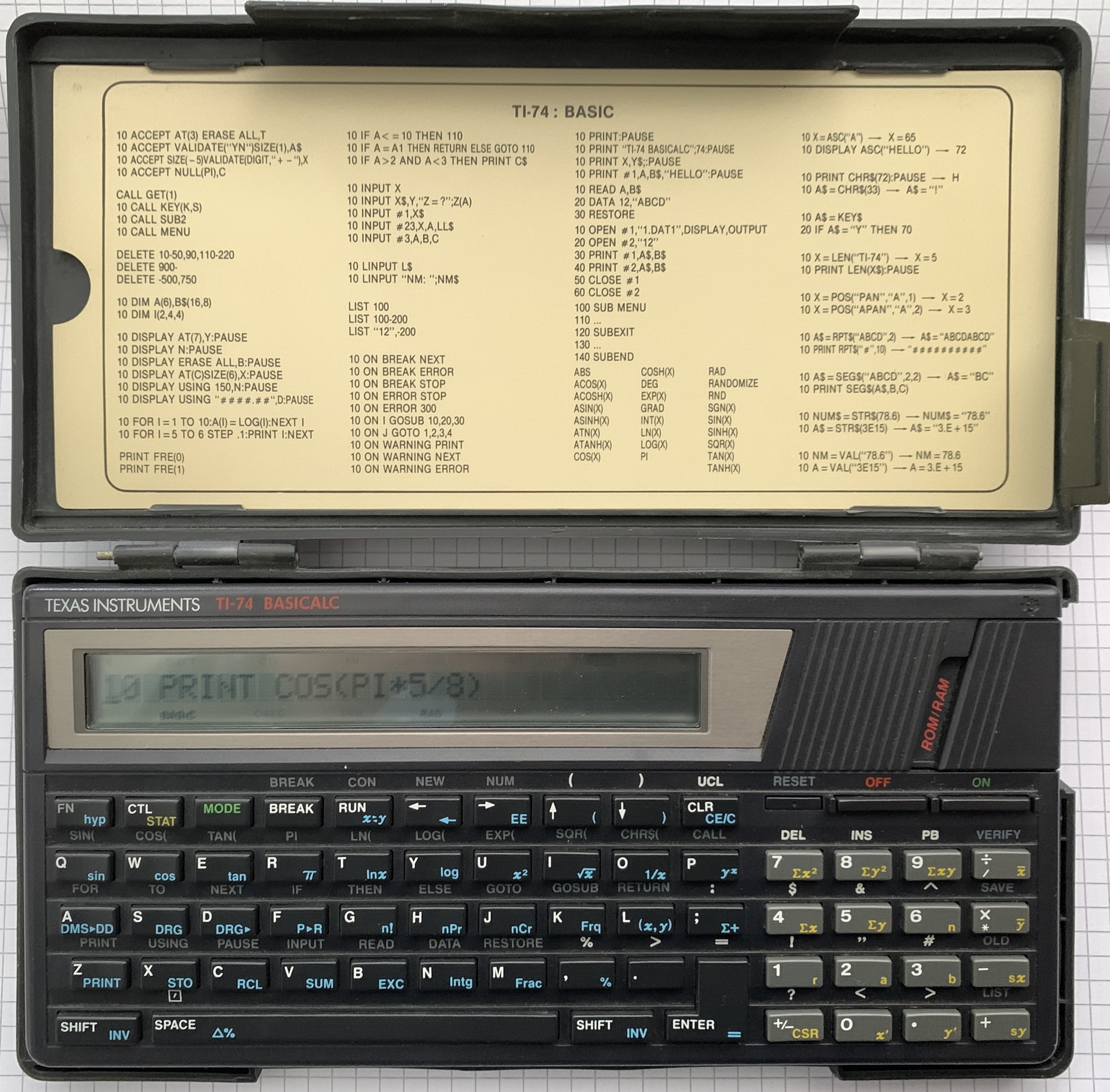
Continua l’esplorazione archeoinformatica dei miei programmi in linguaggio BASIC sviluppati negli anni ’80 e ’90 su homecomputer di quell’epoca. Questa volta voglio raccontarvi di un programmino sviluppato per il microcomputer MSX1 Phillips VG8010 (commercializzato dalla Phillips nel 1984) durante gli ultimi anni di liceo e adattato successivamente al BASIC del mio primo e mitico calcolatore programmabile, il Texas Instruments TI-74 (la figura mostra il mio TI-74 tuttora ancora funzionante), durante i primi anni universitari.

Il programma fu sviluppato con l’intento didattico di analizzare delle funzioni a una variabile in un intervallo definito dall’utente per poter rappresentare la funzione, le sue derivate e l’integrale graficamente, nonché individuarne numericamente le caratteristiche principali, quali le posizioni degli zeri, dei punti estremi e quelli di flesso.

Non avendo delle basi di analisi numerica, gli algoritmi numerici usati per queste analisi non erano molto sofisticati ed erano ispirati a rubriche lette sulla rivista più autorevole di cultura informatica italiana MC-Microcomputer di cui ero un assiduo lettore.

Continue reading

Educational 3D Reconstruction with the RasPi MilliTome

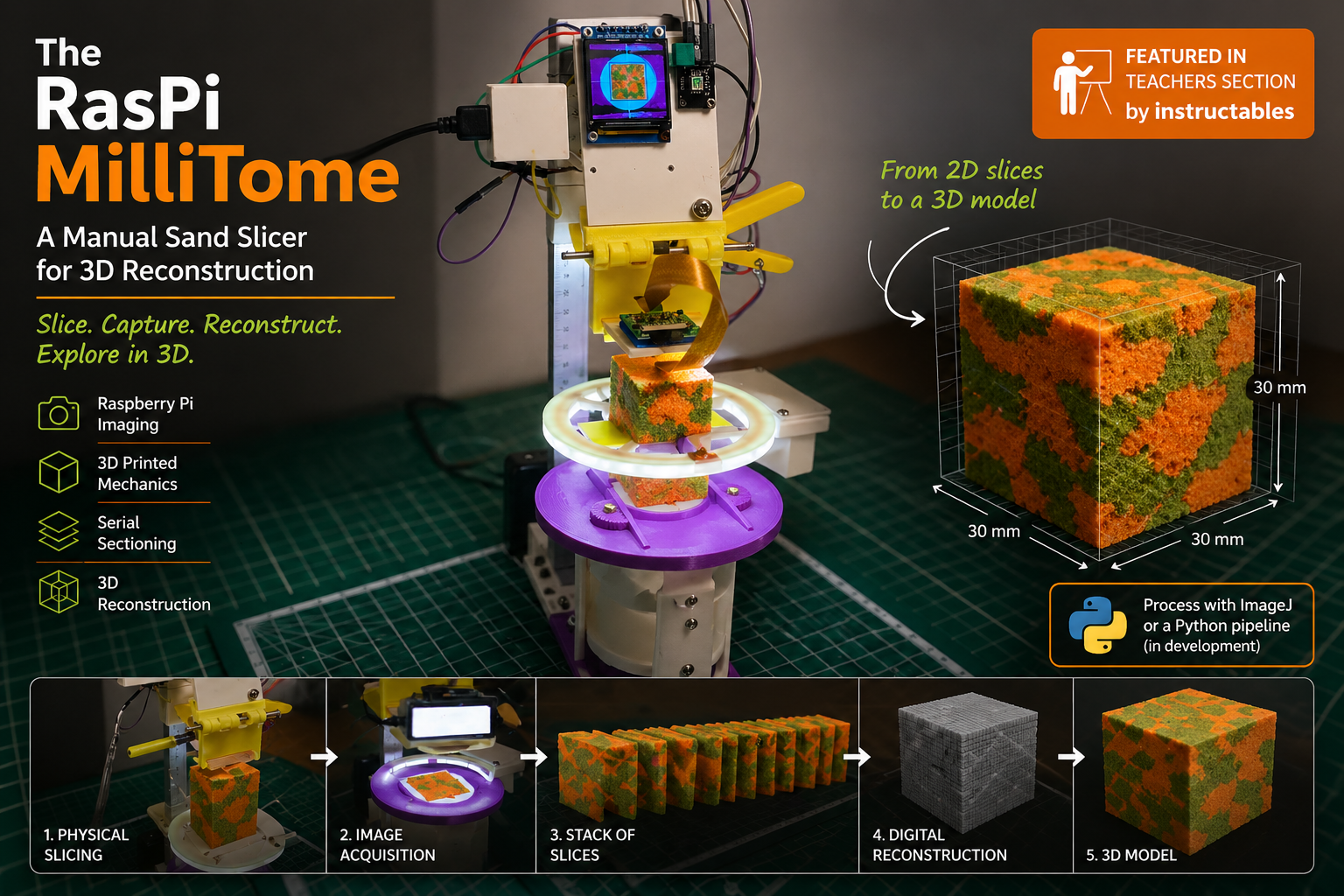
I’m happy to share my latest project, “The RasPi MilliTome: A Manual Sand Slicer for 3D Reconstruction,” which has just been published on Instructables — and even more exciting, it has been featured by their editorial team in the Teachers Section.

Continue reading

Ettore Majorana e L’Equazione di Fermi-Thomas

Perché al mondo vi sono varie categorie di scienziati, gente di secondo e terzo rango, che fa del suo meglio ma non va lontano; c’è anche gente di primo rango, che arriva a scoperte di grande importanza, fondamentali per lo sviluppo della scienza. Ma poi ci sono i geni, come Galileo e Newton. Ebbene Ettore era uno di quelli. (Commento di Enrico Fermi alla notizia della scomparsa di Majorana)

Qualche tempo fa ho rivisto il film su Raiplay in due parti diretto da Gianni Amelio, I ragazzi di via Panisperna. Si tratta di un’opera trasmessa dalla Rai alla fine degli anni Ottanta, molto bella e ben realizzata, che racconta le vicende che portarono alla formazione, negli anni Venti e Trenta, del celebre gruppo di Enrico Fermi presso l’Istituto di Fisica di via Panisperna, all’Università di Roma. Il film si concentra in particolare sulle figure di Ettore Majorana (interpretato da Andrea Prodan) e di Enrico Fermi (Ennio Fantastichini).

Continue reading

The Numerical Solution of Differential Equation using the Shooting Method

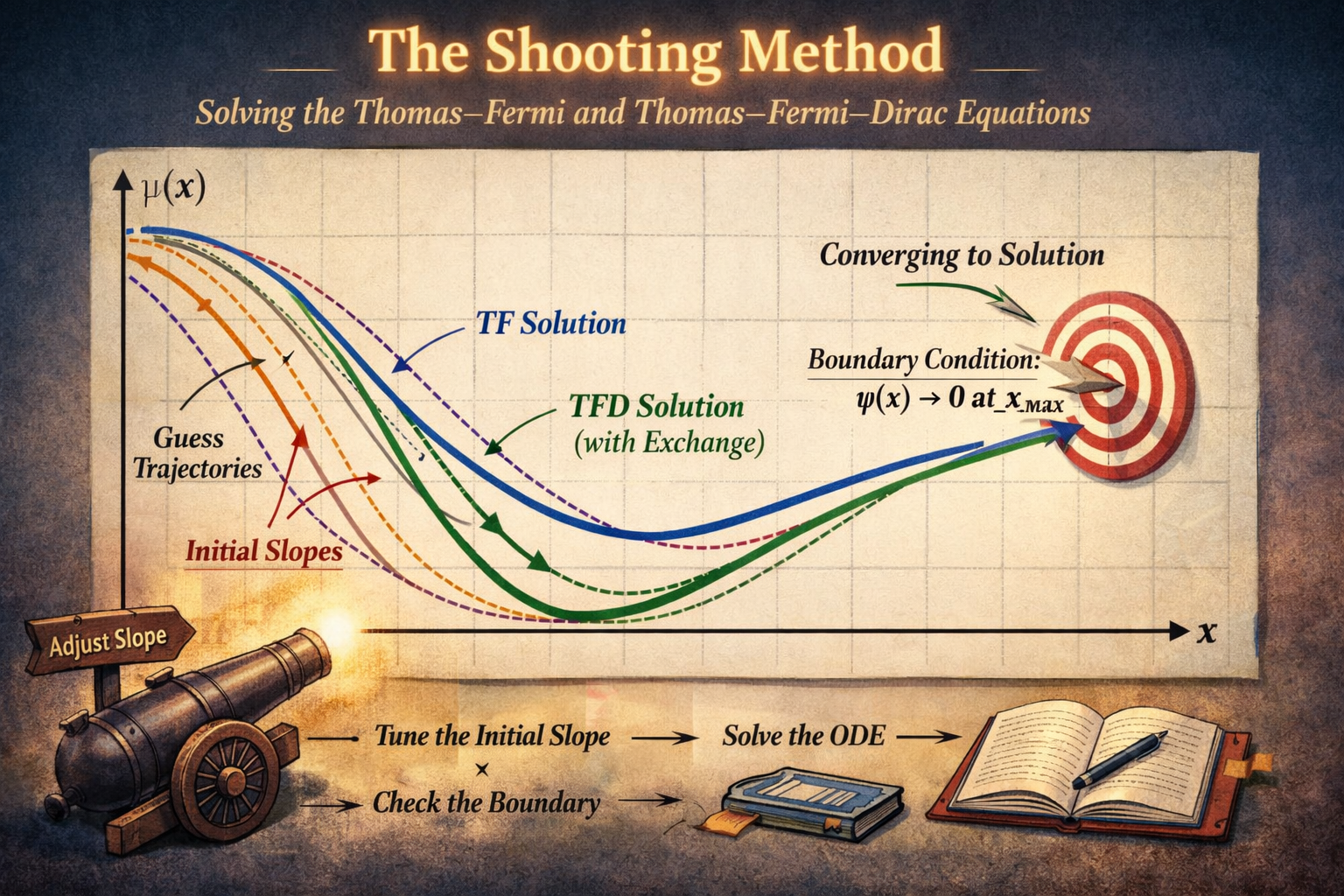
Boundary value problems (BVPs) for ordinary differential equations arise naturally in many areas of physics, engineering, and applied mathematics. Classic examples include the vibration of strings, heat conduction in solids, and quantum mechanical bound states. Unlike initial value problems (IVPs), where all conditions are specified at a single point, BVPs impose constraints at different points of the domain, making them significantly more challenging to solve both analytically and numerically.

Continue reading

The Smoluchowski Diffusion Equation

The Smoluchowski diffusion equation describes the time evolution of the probability density function (PDF) of a particle undergoing overdamped Brownian motion in a potential energy landscape. It is a central equation in statistical mechanics, soft matter physics, and chemical physics.

Continue reading

Understanding the Discrete Fourier Transform in Signal Analysis

In previous posts on this blog I have already introduced the Fourier series and the Fourier transform, following their historical development from Joseph Fourier’s original work on heat conduction to their modern role in physics, engineering, and signal analysis. Rather than repeating that material here, I will take it as a starting point.

When we look at a signal — a sound wave, a vibration, or even a curve drawn by hand — we usually perceive it as a function of time or space. However, very often the most relevant information is not immediately visible in this representation. It is hidden in the frequencies that compose the signal, and in how strongly each of them contributes.

This is precisely the idea behind the Discrete Fourier Transform (DFT): to decompose a discrete signal into a finite sum of harmonic components, each characterized by an amplitude and a phase. Conceptually, the DFT is not a new theory, but a practical bridge between the continuous Fourier framework and the realities of digital data, measurements, and numerical simulations.

Rather than starting from abstract formulas, in this post I adopt a visual and experimental approach. The discussion is supported by an interactive program that allows one to draw an arbitrary signal and explore its harmonic content, and by a practical electronics project where Fourier analysis is applied to real sound and noise signals.

Continue reading

Retro Programming Nostalgia VIII: 1926-2026 l’equazione di Schrödinger e la struttura elettronica dell’atomo d’idrogeno

Quest’anno ricorre l’anniversario della pubblicazione dell’articolo di Edwin Schrödinger (1887-1961) in cui viene introdotta la sua famosa equazione. Prendendo spunto da questa occasione, ho ripescato e rinnovato uno dei miei antichi progetti di programmazione in BASIC con i miei microcomputer negli anni ’80. Di nuovo il microcomputer era il mio amato Phillips MSX, di cui ho parlato in altri blog. Studiando chimica, non potevo non essere attratto dalla bellezza e dall’eleganza delle soluzioni dell’equazione di Schrödinger per l’atomo d’idrogeno. Inspirato dal libro (S. Marseglia, La Chimica col personal computer pubblicato dalla Muzzio) in cui mostrava alcuni esempi di programmi in BASIC per la chimica, decisi di imbarcarmi nell’impresa e usare l’MSX e poi l’Amiga Basic Basic per provare a riprodurre le bellissime visualizzazioni degli orbitali molecolari che vedevo nei libri di chimica universitari. Ma prima di questo vediamo di tornare a contenuto dell’articolo di Schrödinger.

Continue reading

RaPenduLa: Una Video piattaforma Fai-Da-Te Per Studiare Oscillazioni Meccaniche

Qualche giorno fa ho pubblicato un nuovo progetto educativo sul mio sito Instructables. Il dispositivo, che ho battezzato RaPenduLa (dalle iniziali in inglese di RaspPi Pendulum Laboratory), è stato ribattezzato in italiano CAMPO (Computer Analisi Moto Pendolare Oscillante) grazie a un suggerimento di ChatGPT. Ma, come direbbe Shakespeare, ‘What’s in a name? That which we call a rose by any other name would smell as sweet’: il cuore del progetto è infatti una piattaforma video per lo studio delle oscillazioni meccaniche. Utilizzando un Raspberry Pi Zero W2 dotato di modulo fotocamera, il sistema registra ad alta velocità il movimento dei pendoli. Poi, con un’analisi video basata su Python e OpenCV, RaPenduLa è in grado di tracciare il percorso preciso della punta del pendolo, visualizzandone il comportamento oscillatorio in 2D.

Continue reading

Easter 2025: Exploring Egg-Shaped Billiards

It has become a recurrent habit for me to write a blog on the shape of eggs to wish you a Happy Easter. Not repeating oneself and finding a new interesting topic is a brainstorming exercise of lateral thinking and a systematic search in literature to find an interesting connection. This year, I wanted to explore an idea that has been lurching in my mind for some time for other reasons: billiards.

I used to play snooker from time to time with some old friends. I am a far cry from being even an amateur in the billiard games, but I had a lot of fun verifying the laws of mechanics on a green table. I soon discovered that studying the dynamics of bouncing collision of an ideal cue ball in billiards of different shapes keeps brilliant mathematicians and physicists engaged in recreational academic studies and important theoretical implications.

Continue reading