The Lissajous-Bowditch Curves

Try to glue a small mirror to the end of a bent piece of wire fixed to a stable platform and let the laser beam of a laser pointer reflect on it. Entangled spires of an ephemeral red dragon will perform a hypnotic dance on the wall of your room. This voluptuous dance results from two mutually perpendicular harmonic oscillations produced by the oscillations of the elastic wire. 

The curved patterns are called Lissajous-Bowditch figures and named after the French physicist Jules Antoine Lissajous who did a detailed study of them (published in his Mémoire sur l’étude optique des mouvements vibratoires, 1857). The American mathematician Nathaniel Bowditch (1773 – 1838) conducted earlier and independent studies on the same curves and for this reason, the figures are also called  Lissajous-Bowditch curves. Lissajous invented different mechanical devices consisting of two mirrors attached to two oriented diapasons (or other oscillators) by double reflecting a collimated ray of light on a screen, produce these figures upon oscillations of the diapasons.  The diapason can be substituted with elastic wires, speakers, pendulum or electronic circuits. In the last case, the light is the electron beam of a cathodic tube (or its digital equivalent)  of an oscilloscope. This article is about the mathematical theory behind these curves introduced with a demonstration program and an example of education application proposed in 1827 by C. Wheatstone . Finally, we will give a look to the equivalent of the L-B curves in 3D by exploring the spherical L-B curves.

Continue reading

Calculus in a Nutshell: Functions and their Derivatives

When I was about thirteen, the library was going to get ‘Calculus for the Practical Man.’ By this time I knew, from reading the encyclopedia, that calculus was an important and interesting subject, and I ought to learn it.  

Richard P. Feynman, from What Do You Care What Other People Think?

Introduction

Calculus is an important branch of mathematics that deals with the methods for calculating derivatives and integrals of functions and using this information to study the properties of functions. It was independently invented by I. Newton and W. Leibniz in the 18{^{th}} century and it was further developed by other great mathematicians in the centuries that follows (see Figure below).
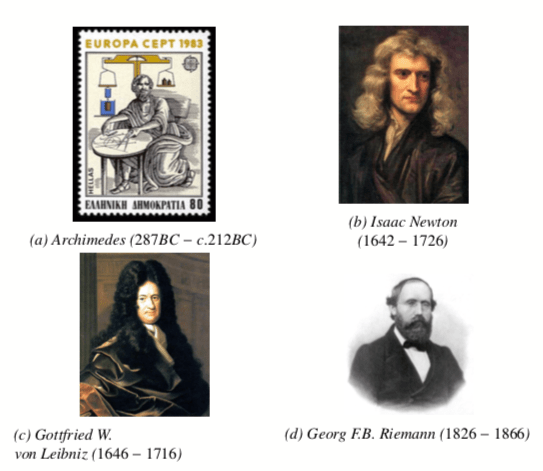
Figure 1: Some of the great mathematician that invented the Calculus.

It comprises two areas:

  • Differential calculus {\rightarrow} It concerns the study of the rate of variation of functions.
  • Integral calculus {\rightarrow} It concern the study of the area under functions.

Depending on the nature of the functions involved in the calculations, we can further distinguish between the single- and multi-variable calculus. In this chapter, the main concepts and methods of the single-variable calculus are summarised.

Continue reading

The Fourier Transform

Pure mathematics is much more than an armory of tools and techniques for the applied mathematician. On the other hand, the pure mathematician has ever been grateful to applied mathematics for stimulus and inspiration. From the vibrations of the violin string they have drawn enchanting harmonies of Fourier Series, and to study the triode valve they have invented a whole theory of non-linear oscillations.

George Frederick James Temple In 100 Years of Mathematics: a Personal Viewpoint (1981).


The Fourier Transform (FT) is an integral transform, a powerful mathematical tool to map a function from its original space representation into another function space (called, in this case, the Fourier space). In the time domain, the Fourier space is the frequency and in the Cartesian domain is the so-called reciprocal space. The FT is accomplished by integrating the given function in its original space. The advantage of the FT is that in the transformed space, the properties of the original function can usually be characterised and manipulated more quickly than in the original function space. The FT function can generally be mapped back to the original function space using the inverse FT.

The FT plays an important role in pure and applied science, computer science, electronic engineering, and medicine. In this lecture, I will shortly introduce the mathematics of the FT and then show some examples of practical applications.

Continue reading

The Fourier Series

Pure mathematics is much more than an armory of tools and techniques for the applied mathematician. On the other hand, the pure mathematician has ever been grateful to applied mathematics for stimulus and inspiration. From the vibrations of the violin string they have drawn enchanting harmonies of Fourier Series, and to study the triode valve they have invented a whole theory of non-linear oscillations.

George Frederick James Temple In 100 Years of Mathematics: a Personal Viewpoint (1981).


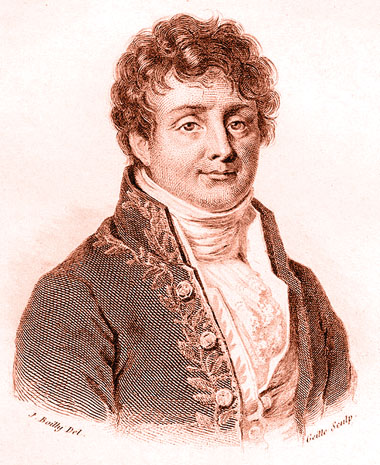
Figure 1: Jean-Baptiste Joseph Fourier(source wikipedia)

The Fourier Series is a very important mathematics tool discovered by Jean-Baptiste Joseph Fourier in the 18th century. The Fourier series is used in many important areas of science and engineering. They are used to give an analytical approximate description of complex periodic function or series of data.  In this blog, I am going to give a short introduction to it.

Continue reading

La Serie​ di Taylor

La serie di Taylor è un utilissimo strumento matematico. In questo blog, ne darò una breve descrizione dando qualche esempio di applicazione.

Chi è il signor Taylor?

Brook Taylor (1685 – 1731) era un matematico britannico del XVII secolo che ha dimostrato la formula che porta il suo nome, e l’argomento di questo blog, nel volume Methodus Incrementorum Directa et Inversa (1715). Maggiori informazioni si possono trovare nella corrispondente pagina della wikipedia.

Continue reading

The Taylor Series

The Taylor series is a mathematical tool that, sometimes, it is not easy to immediately grasp by freshman students. In this blog, I will give a short review of it giving some examples of applications.

Who is Mr. Taylor?

Brook Taylor (1685 – 1731) was a 17th-century British mathematician. He demonstrated the celebrated Taylor formula, the topics of this blog, in his masterwork Methodus Incrementorum Directa et Inversa (1715). For more information, just give a read to the following wiki page.

Continue reading

Modelling Natural Pattens and Forms I: Sunflowers Florets and the Golden Ratio

Il girasole piega a occidente
e già precipita il giorno nel suo
occhio in rovina … 
from the poem  “Quasi un madrigale” by Salvatore Quasimodo.

Continue reading

Retro Programming II: the Amiga and the Computational Beauty of the Leaf

In my archaeological exploration of old computer files, I came across another simple but exciting Amiga Basic program I programmed in 1989. It is named “Foglie”, the Italian name for leaves. It was an attempt to explore some ideas of functional plant morphology modelling. The stimulus comes after the reading of the paper by Karl J. Niklas on issue 213 of Le Science (the Italian edition of the Scientific American magazine [1]). The article titled “Computer-simulated plant evolution” described the modelling of plants to study their interaction with the environment. It was a fascinating paper; still, simple and primitive graphics caught my imagination. Nowadays, the field of digital morphology has come to an age (just to mention one, Avatar), and we can have an idea of this progress in the level of realism in movies, video games, and TV programs. However, the organism’s form and shape have always caught my curiosity and interest. The structure of leaf nervation was an intriguing pattern related to my acquaintance with the fascinating fractals objects, another recurrent topic in the pages of scientific magazines of the period.

Continue reading