The Numerical Solution of Differential Equation using the Shooting Method

Boundary value problems (BVPs) for ordinary differential equations arise naturally in many areas of physics, engineering, and applied mathematics. Classical examples include the vibration of strings, heat conduction in solids, and quantum mechanical bound states. Unlike initial value problems (IVPs), where all conditions are specified at a single point, BVPs impose constraints at different points of the domain, making them significantly more challenging to solve both analytically and numerically.

The shooting method is one of the most intuitive and historically rooted techniques for tackling such problems. Its central idea is simple: transform a boundary value problem into an initial value problem by guessing the missing initial conditions, then iteratively refine this guess until the solution satisfies the boundary conditions at the other end. The method is often illustrated through a ballistic analogy—one “shoots” from the initial point and adjusts the trajectory until the target is hit. Although the shooting method was formalized only in the 20th century, its conceptual foundations can be traced back much earlier. The study of differential equations in the 18th and 19th centuries by mathematicians such as Leonhard Eulerand Joseph-Louis Lagrange already revealed the difficulty of boundary value problems in mechanics and astronomy. At that time, analytical solutions were often unavailable, and practitioners relied on approximation strategies that implicitly resembled “trial-and-error” approaches. A decisive step toward the modern shooting method came with the development of reliable numerical solvers for initial value problems around 1900, notably through the work of Carl Runge and Martin Kutta. Their methods provided the computational backbone needed to integrate differential equations accurately from a given starting point. This made it feasible to implement the idea of repeatedly “shooting” with different initial guesses. The method gained wider recognition and systematic treatment in the mid-20th century, alongside the emergence of numerical analysis as a distinct discipline. Influential mathematicians such as Richard Courant contributed to the theoretical understanding of boundary value problems, while the increasing availability of digital computers transformed the shooting method into a practical and widely used computational tool.

Today, the shooting method remains a cornerstone in the teaching of numerical methods due to its conceptual clarity and direct connection to physical intuition. While more robust techniques—such as finite difference and finite element methods—are often preferred for complex or stiff problems, the shooting method continues to play an important role in applications ranging from classical mechanics to quantum physics, where it is frequently used to determine eigenvalues and admissible solutions.

In this blog, I will give an example of the application of the method to the solution of the Thomas-Fermi and Thomas-Fermi-Dirac equations.

Continue reading
The Smoluchowski Diffusion Equation

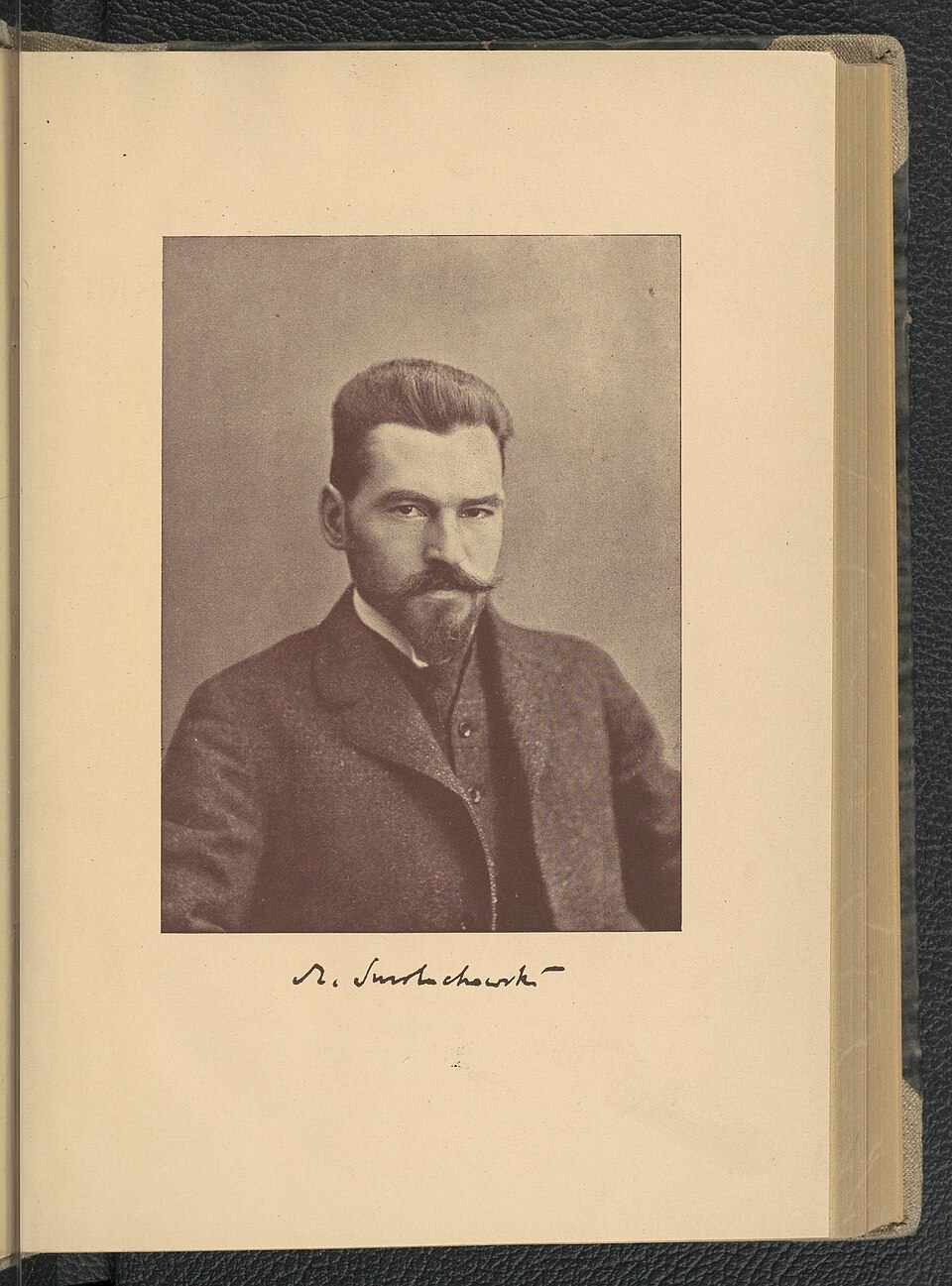
The Smoluchowski diffusion equation describes the time evolution of the probability density function (PDF) of a particle undergoing overdamped Brownian motion in a potential energy landscape. It is a central equation in statistical mechanics, soft matter physics, and chemical physics.

Its origins trace back to the early 20th century, in the context of the theoretical understanding of Brownian motion. Following the seminal work of Albert Einstein in 1905, who provided a statistical description of diffusion and established a quantitative link between microscopic fluctuations and macroscopic transport, further developments aimed to incorporate external forces and interactions. In 1916, Marian Smoluchowski extended Einstein’s framework by considering particles subjected to systematic forces arising from a potential field. His formulation led to what is now known as the Smoluchowski equation, effectively describing diffusion in the overdamped (high-friction) limit where inertial effects can be neglected. This marked a crucial step toward connecting stochastic motion with deterministic drift. A complementary perspective emerged through the work of Paul Langevin (1908), who introduced a stochastic differential equation for particle motion, explicitly incorporating random forces. The equivalence between the Langevin description and the corresponding evolution equation for probability densities—later formalized as the Fokker–Planck equation—provided a deep and unifying framework. The general mathematical structure of such evolution equations was further clarified by Adriaan Fokker and Max Planck in the early 20th century, leading to the modern formulation of the Fokker–Planck equation. The Smoluchowski equation can be viewed as a specific limit of this more general framework. Later, in the 1940s, Hendrik Anthony Kramers applied these ideas to chemical reaction rates, analyzing barrier crossing in potential landscapes. His work revealed how transition rates depend exponentially on the energy barrier height, establishing the foundation of what is now known as Kramers’ theory—an essential concept for understanding metastability and rare events.

In this article, we consider the one-dimensional (1D) case, where a particle moves along a coordinate r under the influence of a potential of mean force U(r).

Continue reading

Understanding the Discrete Fourier Transform in Signal Analysis

In previous posts on this blog I have already introduced the Fourier series and the Fourier transform, following their historical development from Joseph Fourier’s original work on heat conduction to their modern role in physics, engineering, and signal analysis. Rather than repeating that material here, I will take it as a starting point.

When we look at a signal — a sound wave, a vibration, or even a curve drawn by hand — we usually perceive it as a function of time or space. However, very often the most relevant information is not immediately visible in this representation. It is hidden in the frequencies that compose the signal, and in how strongly each of them contributes.

This is precisely the idea behind the Discrete Fourier Transform (DFT): to decompose a discrete signal into a finite sum of harmonic components, each characterized by an amplitude and a phase. Conceptually, the DFT is not a new theory, but a practical bridge between the continuous Fourier framework and the realities of digital data, measurements, and numerical simulations.

Rather than starting from abstract formulas, in this post I adopt a visual and experimental approach. The discussion is supported by an interactive program that allows one to draw an arbitrary signal and explore its harmonic content, and by a practical electronics project where Fourier analysis is applied to real sound and noise signals.

Continue reading

Retro Programming Nostalgia VIII: 1926-2026 l’equazione di Schrödinger e la struttura elettronica dell’atomo d’idrogeno

Quest’anno ricorre l’anniversario della pubblicazione dell’articolo di Edwin Schrödinger (1887-1961) in cui viene introdotta la sua famosa equazione. Prendendo spunto da questa occasione, ho ripescato e rinnovato uno dei miei antichi progetti di programmazione in BASIC con i miei microcomputer negli anni ’80. Di nuovo il microcomputer era il mio amato Phillips MSX, di cui ho parlato in altri blog. Studiando chimica, non potevo non essere attratto dalla bellezza e dall’eleganza delle soluzioni dell’equazione di Schrödinger per l’atomo d’idrogeno. Inspirato dal libro (S. Marseglia, La Chimica col personal computer pubblicato dalla Muzzio) in cui mostrava alcuni esempi di programmi in BASIC per la chimica, decisi di imbarcarmi nell’impresa e usare l’MSX e poi l’Amiga Basic Basic per provare a riprodurre le bellissime visualizzazioni degli orbitali molecolari che vedevo nei libri di chimica universitari. Ma prima di questo vediamo di tornare a contenuto dell’articolo di Schrödinger.

Continue reading

RaPenduLa: Una Video piattaforma Fai-Da-Te Per Studiare Oscillazioni Meccaniche

Qualche giorno fa ho pubblicato un nuovo progetto educativo sul mio sito Instructables. Il dispositivo, che ho battezzato RaPenduLa (dalle iniziali in inglese di RaspPi Pendulum Laboratory), è stato ribattezzato in italiano CAMPO (Computer Analisi Moto Pendolare Oscillante) grazie a un suggerimento di ChatGPT. Ma, come direbbe Shakespeare, ‘What’s in a name? That which we call a rose by any other name would smell as sweet’: il cuore del progetto è infatti una piattaforma video per lo studio delle oscillazioni meccaniche. Utilizzando un Raspberry Pi Zero W2 dotato di modulo fotocamera, il sistema registra ad alta velocità il movimento dei pendoli. Poi, con un’analisi video basata su Python e OpenCV, RaPenduLa è in grado di tracciare il percorso preciso della punta del pendolo, visualizzandone il comportamento oscillatorio in 2D.

Continue reading

RaPenduLa: A DIY Video Platform for Exploring Mechanical Oscillations

I have recently published another educational project on my Instructables website. I called the device RaPenduLa for the RaspPi Pendulum Laboratory, and it is a video platform for studying mechanical oscillations. It uses a Raspberry Pi Zero W2 equipped with a camera module to record the motion of pendulums at high speed. The interesting part happens through video analysis: using Python and the fantastic OpenCV library, RaPenduLa can track the precise path of a pendulum’s tip and help visualize its oscillatory behavior in two dimensions.

Continue reading

The KaleidoPhoneScope: a Dance of Light, Sounds, and Mathematics

Sometime ago, I have written about the Lissajous-Bowditch figures. In the same article, it is described how to build a simple device called a kaleidophone to generate Lissajous patterns. Using a small mirror fixed securely to the end of a bent wire on a stable platform and a laser beam from a laser pointer reflects off it, mesmerizing, intertwined spirals of light. The laser beam will appear dancing on the wall of your room. This enchanting display results from two mutually perpendicular harmonic oscillations generated by the vibrations of the elastic wire. These captivating patterns are known as Lissajous-Bowditch figures and are named after the French physicist Jules Antoine Lissajous, who did a detailed study of them (published in his Mémoire sur l’étude optique des mouvements vibratoires, 1857). The American mathematician Nathaniel Bowditch (1773 – 1838) conducted earlier and independent studies on the same curves, and for this reason, the figures are also called Lissajous-Bowditch curves [2].

LB curves result from the combination of two harmonic motions, and therefore, they can be mathematically generated through a parametric representation involving two sinusoidal functions (see Figure and also here). Lissajous invented different mechanical devices reproducing these periodic oscillations consisting of two mirrors attached to two oriented diapasons (or other oscillators) by double reflecting a collimated ray of light on a screen, producing these figures upon oscillations of the diapasons. The diapason can be substituted with elastic wires, speakers, pendulum, or electronic circuits. In the last case, the light is the electron beam of a cathodic tube (or its digital equivalent) of an oscilloscope [3]. 

The simplest of these devices is the KaleidoPhone, invented (and named) by the British physicist Charles Wheatstone at the beginning of the 19th century [3,4]. The Kaleidophone creates stunning Lissajous patterns and is an excellent example of how science can also be an art form.  You can bring the mesmerizing dance of light to life with just a few simple materials and creativity. 

In a new Instructable project, I have presented a modern compact version of the kalidophone device fabricated with the help of 3D printing technology and enhanced with a digital camera.

For this last bit of modern technology, the new device is called KaleidoPhoneScope. What makes this little device is the facility to adapt it to record another form of vibrations by adding a speaker and another mirror free to vibrate on its bizarre pattern, recalling SciFi movies promp appear on a free wall (or door) of your studio.

As Christmas approaches, what is the best time to try this device with a traditional song? Here is the result. Activate the captions to see the corresponding frequencies of the tones.

I wish you all to spend a Merry Christmas with your dearest, and I hope to see a peace and

REFERENCES

  1. T. B. Greenslade Jr., “All about Lissajous figures,” The Physics Teacher, 31, 364 (1993).
  2. T. B. Greenslade Jr., “Devices to Illustrate Lissajous Figures,” *The Physics Teacher, 41, 351 (2003).
  3. C. Wheatstone, Description of the kaleidophone, or phonic kaleidoscope: A new philosophical toy, for the illustration of several interesting and amusing acoustical and optical phenomena, Quarterly Journal of Science, Literature and Art 23, 344 (1827).
  4. R. J. Whitaker, “The Wheatstone kaleidophone,” American Journal of Physics, 61, 722 (1993).