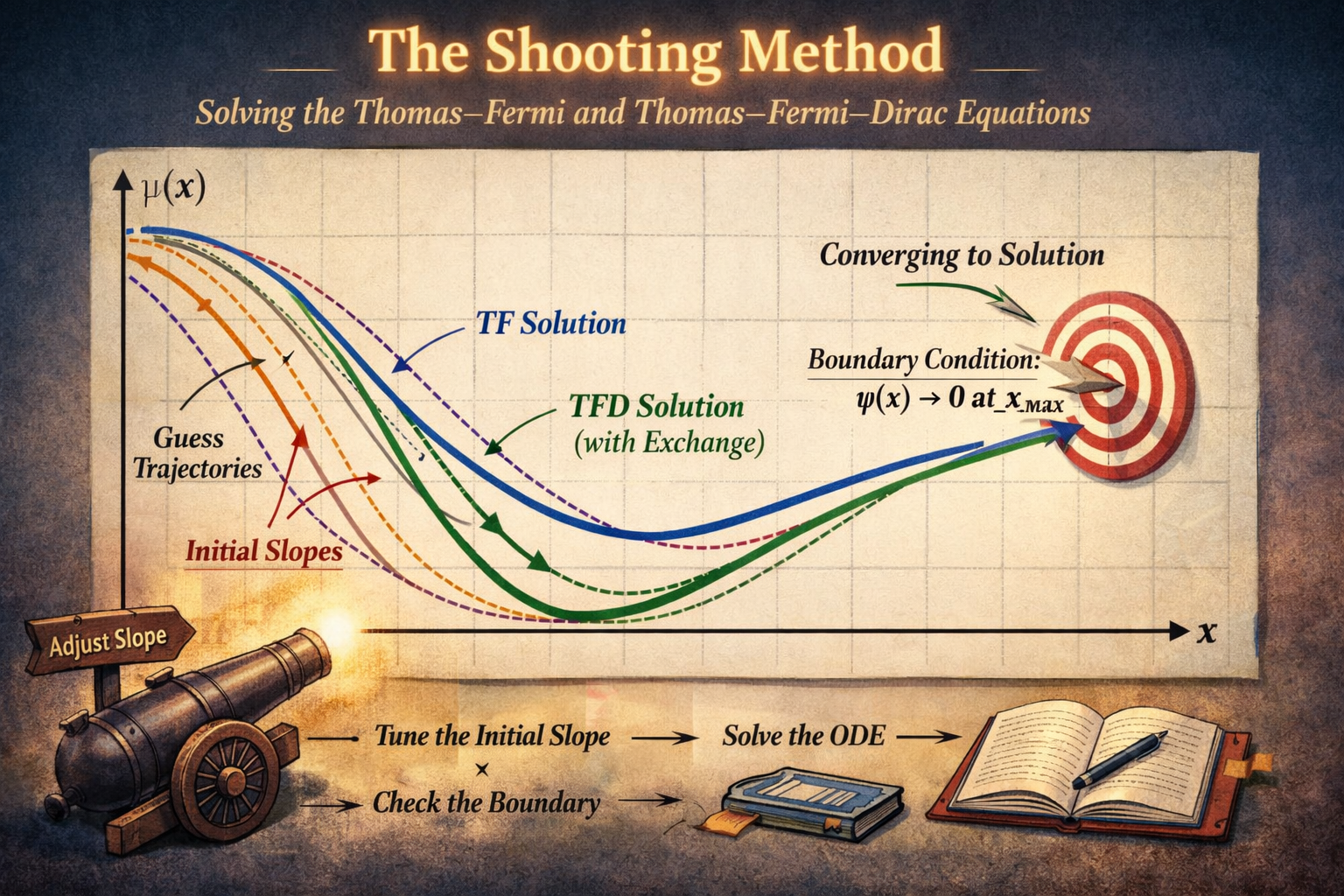
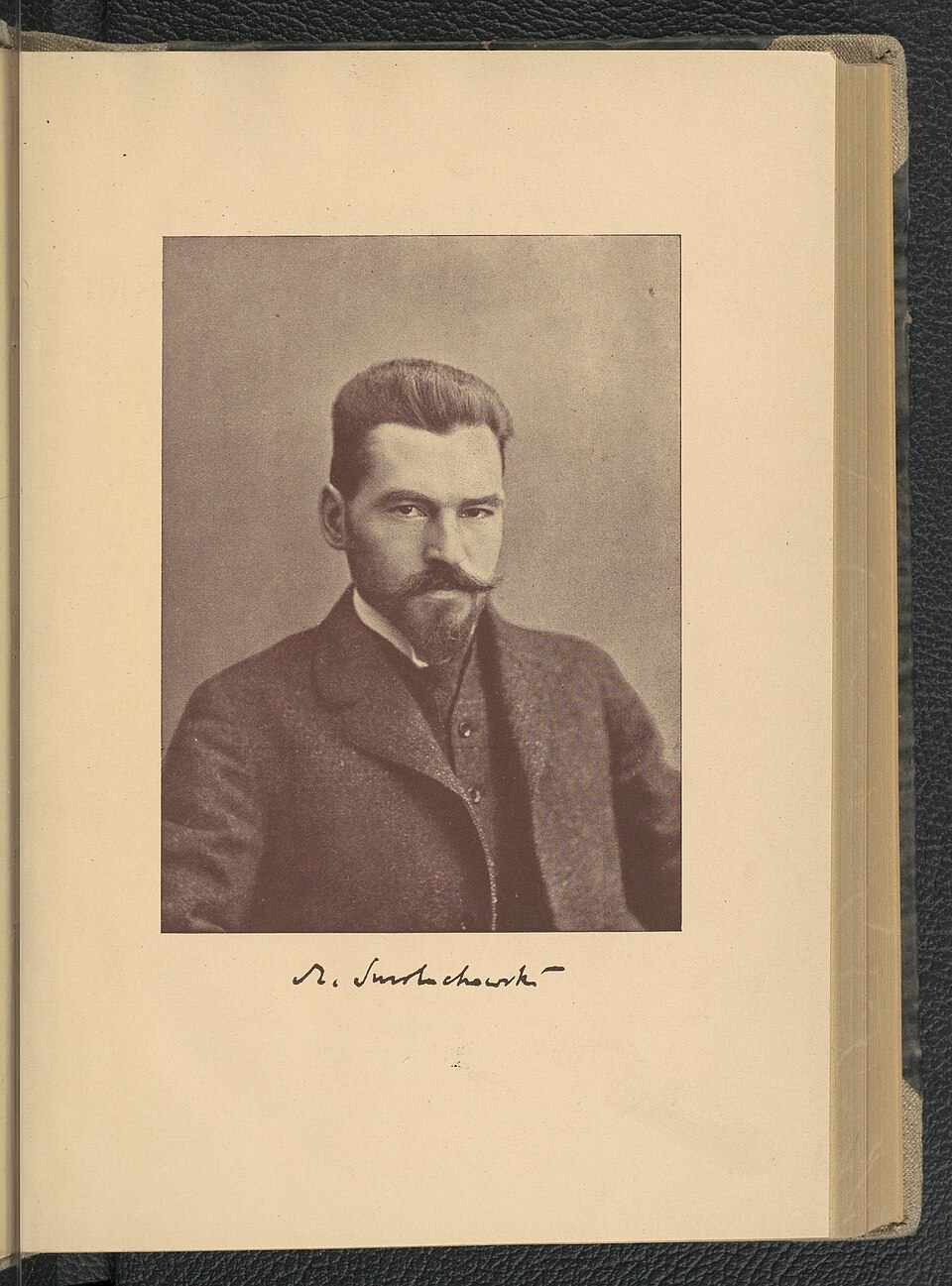
Ettore Majorana e L’Equazione di Fermi-Thomas

Perché al mondo vi sono varie categorie di scienziati, gente di secondo e terzo rango, che fa del suo meglio ma non va lontano; c’è anche gente di primo rango, che arriva a scoperte di grande importanza, fondamentali per lo sviluppo della scienza. Ma poi ci sono i geni, come Galileo e Newton. Ebbene Ettore era uno di quelli. (Commento di Enrico Fermi alla notizia della scomparsa di Majorana)

Qualche tempo fa ho rivisto il film su Raiplay in due parti diretto da Gianni Amelio, I ragazzi di via Panisperna. Si tratta di un’opera trasmessa dalla Rai alla fine degli anni Ottanta, molto bella e ben realizzata, che racconta le vicende che portarono alla formazione, negli anni Venti e Trenta, del celebre gruppo di Enrico Fermi presso l’Istituto di Fisica di via Panisperna, all’Università di Roma. Il film si concentra in particolare sulle figure di Ettore Majorana (interpretato da Andrea Prodan) e di Enrico Fermi (Ennio Fantastichini).

Continue reading
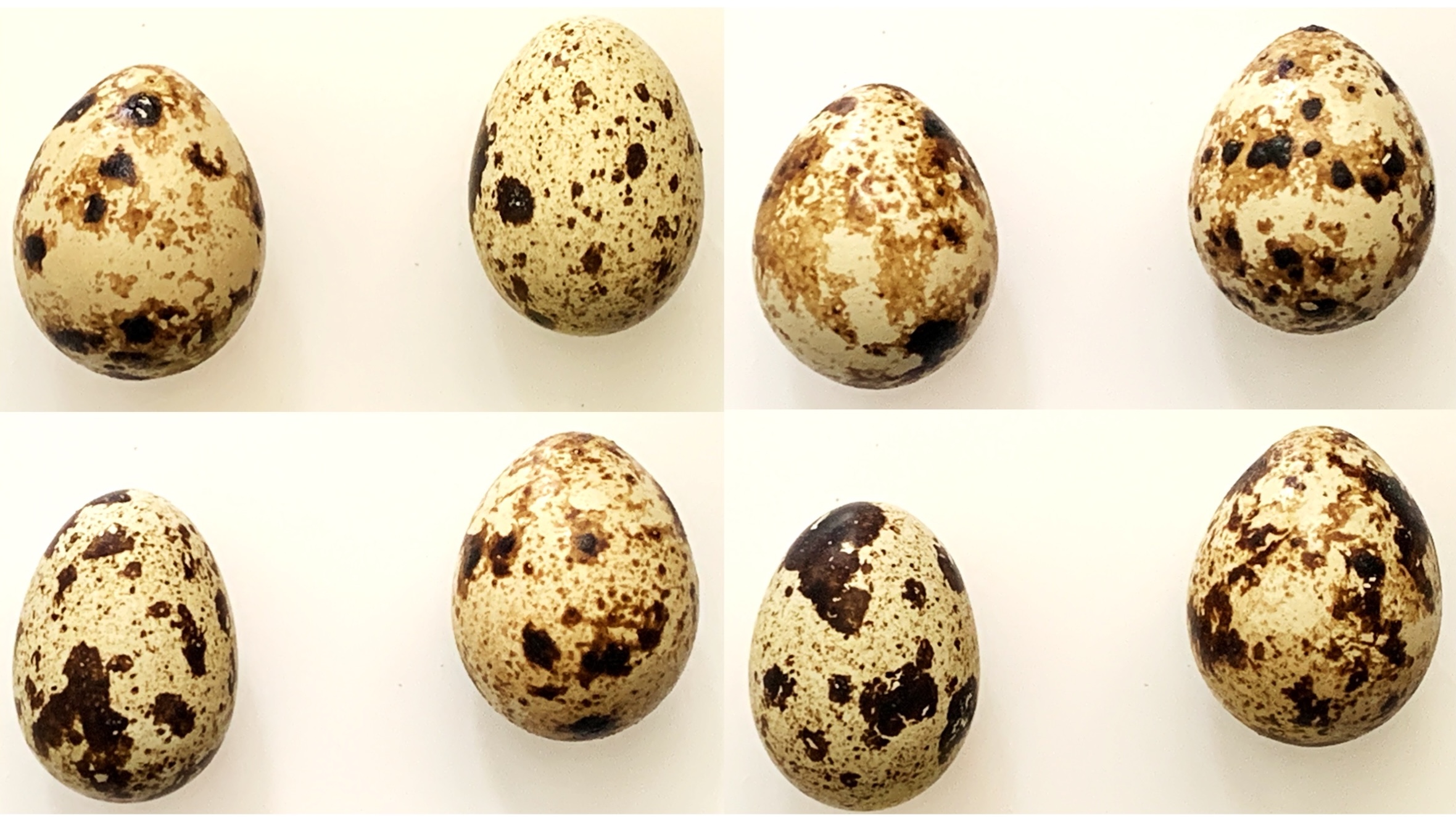
Easter 2026: The Patterns on Coturnix Egg

Last year, after a series of unsuccessful attempts and acquiring three incubators across two countries, my youngest son’s unwavering determination finally paid off.  From a batch of twelve mixed quail eggs, seven hatched successfully, marking the start of our new venture into farm animal husbandry.  Currently, we’ve settled for manageable pets like a Siberian hamster, an aquarium, and pond fish, plus several rounds of stick insects, mantises, and spiders, along with their grasshopper and locust food supplies.  However, quail care is more demanding. While our sons’ happiness is undoubtedly the most important reward, the delicious eggs produced by our farm breeding activity are equally rewarding for the whole family.  It’s particularly satisfying collecting every evening the two expected eggs from the punctual quail hens and admiring their different sizes and pigmentation like beautiful little gems.

If you’re still reading, you’ve probably guessed the main topics of my traditional Easter blog: quail eggs and their shapes and patterns.

Continue reading

The Numerical Solution of Differential Equation using the Shooting Method

Boundary value problems (BVPs) for ordinary differential equations arise naturally in many areas of physics, engineering, and applied mathematics. Classic examples include the vibration of strings, heat conduction in solids, and quantum mechanical bound states. Unlike initial value problems (IVPs), where all conditions are specified at a single point, BVPs impose constraints at different points of the domain, making them significantly more challenging to solve both analytically and numerically.

Continue reading

The Smoluchowski Diffusion Equation

The Smoluchowski diffusion equation describes the time evolution of the probability density function (PDF) of a particle undergoing overdamped Brownian motion in a potential energy landscape. It is a central equation in statistical mechanics, soft matter physics, and chemical physics.

Continue reading

Understanding the Discrete Fourier Transform in Signal Analysis

In previous posts on this blog I have already introduced the Fourier series and the Fourier transform, following their historical development from Joseph Fourier’s original work on heat conduction to their modern role in physics, engineering, and signal analysis. Rather than repeating that material here, I will take it as a starting point.

When we look at a signal — a sound wave, a vibration, or even a curve drawn by hand — we usually perceive it as a function of time or space. However, very often the most relevant information is not immediately visible in this representation. It is hidden in the frequencies that compose the signal, and in how strongly each of them contributes.

This is precisely the idea behind the Discrete Fourier Transform (DFT): to decompose a discrete signal into a finite sum of harmonic components, each characterized by an amplitude and a phase. Conceptually, the DFT is not a new theory, but a practical bridge between the continuous Fourier framework and the realities of digital data, measurements, and numerical simulations.

Rather than starting from abstract formulas, in this post I adopt a visual and experimental approach. The discussion is supported by an interactive program that allows one to draw an arbitrary signal and explore its harmonic content, and by a practical electronics project where Fourier analysis is applied to real sound and noise signals.

Continue reading

Retro Programming Nostalgia VIII: 1926-2026 l’equazione di Schrödinger e la struttura elettronica dell’atomo d’idrogeno

Quest’anno ricorre l’anniversario della pubblicazione dell’articolo di Edwin Schrödinger (1887-1961) in cui viene introdotta la sua famosa equazione. Prendendo spunto da questa occasione, ho ripescato e rinnovato uno dei miei antichi progetti di programmazione in BASIC con i miei microcomputer negli anni ’80. Di nuovo il microcomputer era il mio amato Phillips MSX, di cui ho parlato in altri blog. Studiando chimica, non potevo non essere attratto dalla bellezza e dall’eleganza delle soluzioni dell’equazione di Schrödinger per l’atomo d’idrogeno. Inspirato dal libro (S. Marseglia, La Chimica col personal computer pubblicato dalla Muzzio) in cui mostrava alcuni esempi di programmi in BASIC per la chimica, decisi di imbarcarmi nell’impresa e usare l’MSX e poi l’Amiga Basic Basic per provare a riprodurre le bellissime visualizzazioni degli orbitali molecolari che vedevo nei libri di chimica universitari. Ma prima di questo vediamo di tornare a contenuto dell’articolo di Schrödinger.

Continue reading

Bringing FRET and Molecular Dynamics Together to Understand Flexible Peptides

Important structural components of proteins, like linker loops and intrinsically disordered regions, are highly flexible and constantly change shape in solution. These flexible protein regions — especially those containing glycine- and serine-rich segments — do not behave like neatly folded proteins. They fluctuate, breathe, and explore broad conformational landscapes. These motions can often be central to biological function. But capturing them consistently, both structurally and dynamically, remains challenging. To understand the physics of this flexibility, we often turn to short model peptides that isolate the essential ingredients of chain dynamics. In an earlier work, we explored glycine- and serine-rich octapeptides using molecular dynamics (MD) simulations in combination with concepts from FRET (Förster Resonance Energy Transfer) spectroscopy. The goal was to understand how flexible chains fluctuate and how these fluctuations are reflected in experimentally measurable distances.

Continue reading