As the year comes to a close, let us take a moment to reflect on the beauty of nature and the profound patterns that can arise from simple rules. Inspired by the Diffusion-Limited Aggregation (DLA) simulation—a concept that creates mesmerizing structures from chaotic randomness—we find parallels between its patterns and the essence of the holiday season.
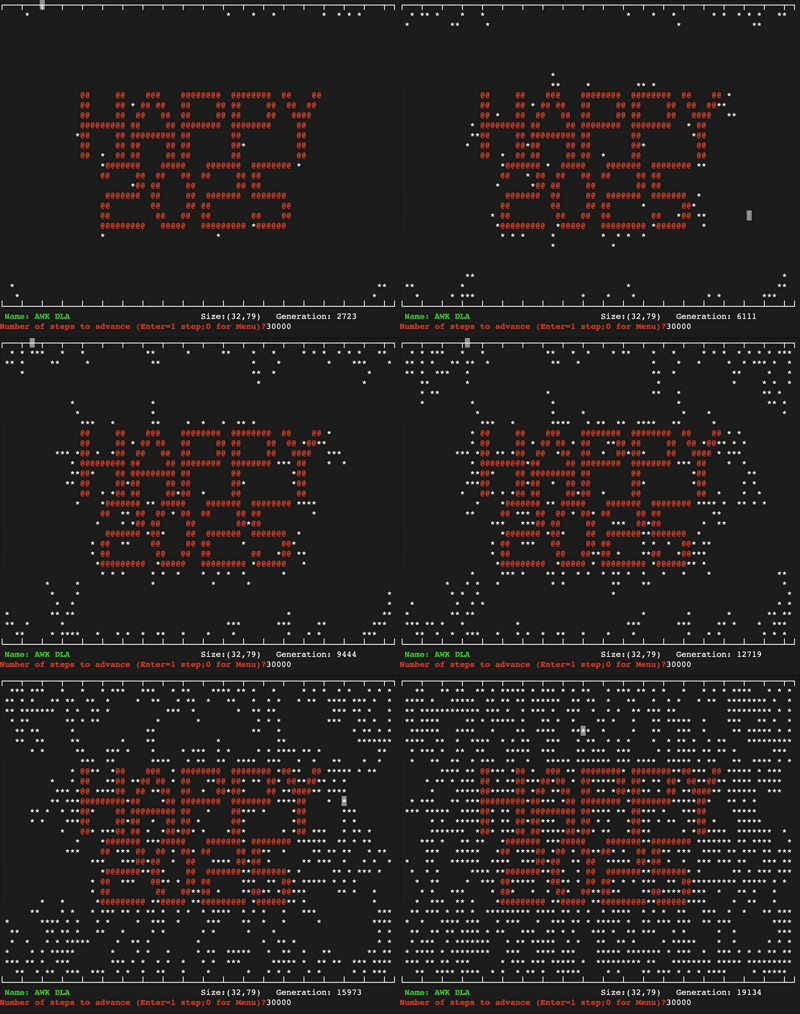
The animation featured here was created using my DLA simulator, written in Awk, my favorite programming language. This program simulates the deposition of randomly diffusing particles in two dimensions. In this case, it mimics the formation of snowflakes or coriander-like clusters, with particles meandering through randomness to form intricate fractal structures.
These patterns remind us how small, individual efforts can come together to create something extraordinary. Be it family gatherings, acts of kindness, or moments of generosity, each step contributes to a larger, beautiful picture—much like how particles aggregate to form stunning natural structures such as snowflakes, coral reefs, or mineral deposits.
Wishing You:
🎄 Fractal Joy: Let your happiness grow in beautiful and unexpected ways.
🌟 Boundless Creativity: Like the Moore and von Neumann neighborhoods in the simulation, embrace different perspectives to expand your horizons.
❄️ Peace and Harmony: May your life’s matrix be filled with meaningful connections and serene moments.
May your holidays be filled with love, joy, and wonder — and may your 2024 be as inspiring as the intricate patterns of life itself!
Happy Holidays! 🌟


 daniloroccatano.blog