Pure mathematics is much more than an armory of tools and techniques for the applied mathematician. On the other hand, the pure mathematician has ever been grateful to applied mathematics for stimulus and inspiration. From the vibrations of the violin string they have drawn enchanting harmonies of Fourier Series, and to study the triode valve they have invented a whole theory of non-linear oscillations.
George Frederick James Temple In 100 Years of Mathematics: a Personal Viewpoint (1981).
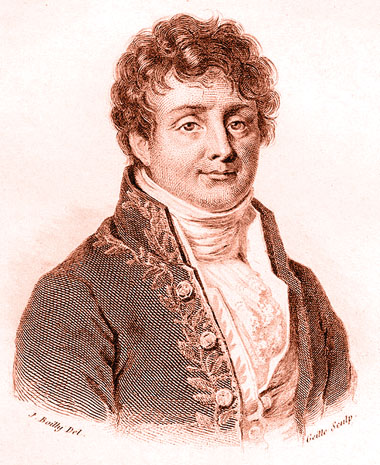
The Fourier Series is a very important mathematics tool discovered by Jean-Baptiste Joseph Fourier in the 18th century. The Fourier series is used in many important areas of science and engineering. They are used to give an analytical approximate description of complex periodic function or series of data. In this blog, I am going to give a short introduction to it.
Let start with some definition. A function 



An example of periodic functions are the sinusoidal function (or sinusoidal oscillation or sinusoidal signal)} given by the function 
: Amplitude. It gives how high the graph
: phase lag. Position of the maximum of the function.
: the time delay or time shift. It tell you how far the graph of the
has been shifted along the t-axis.
: angular frequency. It gives the number of complete oscillation of
.
: frequency of
in a time interval of length 1.
: period.Time required for one complete oscillation.
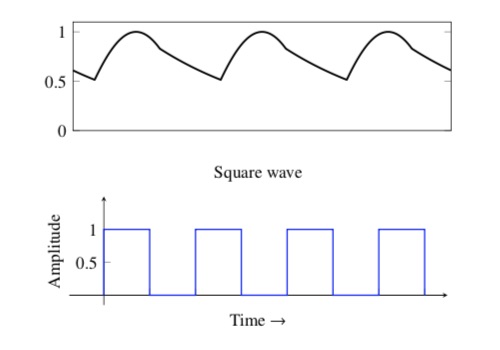
If the function 
![{[-p,p]}](https://s0.wp.com/latex.php?latex=%7B%5B-p%2Cp%5D%7D&bg=ffffff&fg=444444&s=0&c=20201002)

namely as a summation of sinusoidal functions of different frequency and amplitude that allows to approximate any periodic function with any level of accuracy.
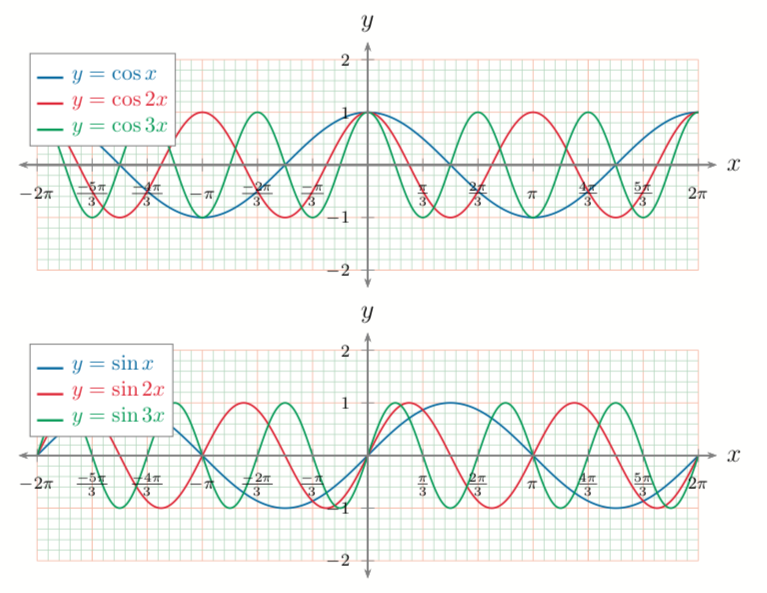
In order to achieve this result we need to calculate the coefficients 

Integral of Orthogonal Functions

This means that for 

for 


This means for all value of 


This means that for

for

Determination of 
We start to integrate both the members of the Fourier series from 

![\int_{-\pi}^{\pi} f(t)dt=\int_{-\pi}^{\pi}\left[\frac{a_0}{2}+\sum_{n=1}^{\infty}a_n \cos (nt)+\sum_{n=1}^{\infty}b_n\sin (nt) \right] dt](https://s0.wp.com/latex.php?latex=%5Cint_%7B-%5Cpi%7D%5E%7B%5Cpi%7D+f%28t%29dt%3D%5Cint_%7B-%5Cpi%7D%5E%7B%5Cpi%7D%5Cleft%5B%5Cfrac%7Ba_0%7D%7B2%7D%2B%5Csum_%7Bn%3D1%7D%5E%7B%5Cinfty%7Da_n+%5Ccos+%28nt%29%2B%5Csum_%7Bn%3D1%7D%5E%7B%5Cinfty%7Db_n%5Csin+%28nt%29+%5Cright%5D+dt+&bg=ffffff&fg=444444&s=0&c=20201002)

For the integrals formulas that we have derived before, we obtain

namely,


Determination of
We start by multiplying both the members of the Fourier series by 
![\int_{-\pi}^{\pi} f(t)\cos (mt) dt=\int_{-\pi}^{\pi}\left[a_0+\sum_{n=1}^{\infty}a_n\cos(nt)+\sum_{n=1}^{\infty}b_n\sin (nt)\right]\cos (mt) dt](https://s0.wp.com/latex.php?latex=%5Cint_%7B-%5Cpi%7D%5E%7B%5Cpi%7D+f%28t%29%5Ccos+%28mt%29+dt%3D%5Cint_%7B-%5Cpi%7D%5E%7B%5Cpi%7D%5Cleft%5Ba_0%2B%5Csum_%7Bn%3D1%7D%5E%7B%5Cinfty%7Da_n%5Ccos%28nt%29%2B%5Csum_%7Bn%3D1%7D%5E%7B%5Cinfty%7Db_n%5Csin+%28nt%29%5Cright%5D%5Ccos+%28mt%29+dt&bg=ffffff&fg=444444&s=0&c=20201002)
Shall we consider the integrals that we get on the right-hand-side:
First term:

The second integral for 

The third integral for the orthonormality of the function is always equal to:

Therefore:

namely, for 

Determination of
We start by multiplying both the members of the Fourier series by 
![\int_{-\pi}^{\pi}f(t)\sin(mt) dt=\int_{-\pi}^{\pi}\left[a_0+\sum_{n=1}^{\infty}a_n\cos(nt)+\sum_{n=1}^{\infty}b_n\sin (nt)\right]\sin(mt) dt](https://s0.wp.com/latex.php?latex=%5Cint_%7B-%5Cpi%7D%5E%7B%5Cpi%7Df%28t%29%5Csin%28mt%29+dt%3D%5Cint_%7B-%5Cpi%7D%5E%7B%5Cpi%7D%5Cleft%5Ba_0%2B%5Csum_%7Bn%3D1%7D%5E%7B%5Cinfty%7Da_n%5Ccos%28nt%29%2B%5Csum_%7Bn%3D1%7D%5E%7B%5Cinfty%7Db_n%5Csin+%28nt%29%5Cright%5D%5Csin%28mt%29+dt+&bg=ffffff&fg=444444&s=0&c=20201002)
Shall we consider the integrals that we get on the right-hand-side:
First term:

Second term:

Third term:

Therefore:

namely, for
Summary
The coefficients of the Fourier series
By replacing m with n we can finally express the coefficient of the series in the final form.


or in the same way we can integrate in the interval 


For a given generic interval



and the Fourier series is give by

Example 1
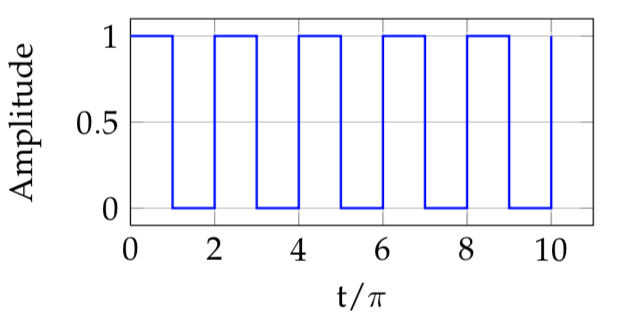
In this example, we will calculate the Fourier coefficient of a the square wave function. This function is of paramount importance in digital electronics since it used in the electronic signal to represent unit of information (bit) as on/off state.
Mathematically, the square wave is represented by functions as

The plot of the extended periodic function is given in the following figure.
We now calculate the Fourier coefficients starting from the term


![a_0 = \frac{1}{\pi} \left[\int_{0}^\pi f(t) ~dt +\int_{\pi}^{2\pi} f(t) ~dt \right]= 1.](https://s0.wp.com/latex.php?latex=a_0+%3D+%5Cfrac%7B1%7D%7B%5Cpi%7D+%5Cleft%5B%5Cint_%7B0%7D%5E%5Cpi+f%28t%29+%7Edt+%2B%5Cint_%7B%5Cpi%7D%5E%7B2%5Cpi%7D+f%28t%29+%7Edt+%5Cright%5D%3D+1.&bg=ffffff&fg=444444&s=0&c=20201002)
The coefficients 

And finally
![\begin{aligned} b_n & = \frac{1}{\pi} \int_{-\pi}^\pi f(t) \sin (nt) ~dt \\ &= \frac{1}{\pi} \int_{0}^\pi \pi \sin (nt) ~dt \\ &= \left[ \frac{- \cos (nt)}{n} \right]_{t=0}^\pi \\ &= \frac{1 - \cos (\pi n)}{n} \\ &= \frac{1 - {(-1)}^n}{n}\end{aligned}](https://s0.wp.com/latex.php?latex=%5Cbegin%7Baligned%7D+b_n+%26+%3D+%5Cfrac%7B1%7D%7B%5Cpi%7D+%5Cint_%7B-%5Cpi%7D%5E%5Cpi+f%28t%29+%5Csin+%28nt%29+%7Edt+%5C%5C+%26%3D+%5Cfrac%7B1%7D%7B%5Cpi%7D+%5Cint_%7B0%7D%5E%5Cpi+%5Cpi+%5Csin+%28nt%29+%7Edt+%5C%5C+%26%3D+%5Cleft%5B+%5Cfrac%7B-+%5Ccos+%28nt%29%7D%7Bn%7D+%5Cright%5D_%7Bt%3D0%7D%5E%5Cpi+%5C%5C+%26%3D+%5Cfrac%7B1+-+%5Ccos+%28%5Cpi+n%29%7D%7Bn%7D+%5C%5C+%26%3D+%5Cfrac%7B1+-+%7B%28-1%29%7D%5En%7D%7Bn%7D%5Cend%7Baligned%7D&bg=ffffff&fg=444444&s=0&c=20201002)
or

The Fourier series is

In this way, for example, the first 3 harmonics of the series are

Example 2
In this second example the square wave signal is defined as a odd function such that 

The plot of the extended periodic function is given in the following figure.

We now calculate the Fourier coefficients starting from the term

The coefficients
And finally
![\begin{aligned} b_n & = \frac{1}{\pi} \int_{-\pi}^\pi f(t) \sin (nt) ~dt \\ &= \frac{1}{\pi} \int_{0}^\pi \pi \sin (nt) ~dt \\ &= \left[ \frac{- \cos (nt)}{n} \right]_{t=0}^\pi \\ &= \frac{1 - \cos (\pi n)}{n} \\ &= \frac{1 - {(-1)}^n}{n} \end{aligned}](https://s0.wp.com/latex.php?latex=%5Cbegin%7Baligned%7D+b_n+%26+%3D+%5Cfrac%7B1%7D%7B%5Cpi%7D+%5Cint_%7B-%5Cpi%7D%5E%5Cpi+f%28t%29+%5Csin+%28nt%29+%7Edt+%5C%5C+%26%3D+%5Cfrac%7B1%7D%7B%5Cpi%7D+%5Cint_%7B0%7D%5E%5Cpi+%5Cpi+%5Csin+%28nt%29+%7Edt+%5C%5C+%26%3D+%5Cleft%5B+%5Cfrac%7B-+%5Ccos+%28nt%29%7D%7Bn%7D+%5Cright%5D_%7Bt%3D0%7D%5E%5Cpi+%5C%5C+%26%3D+%5Cfrac%7B1+-+%5Ccos+%28%5Cpi+n%29%7D%7Bn%7D+%5C%5C+%26%3D+%5Cfrac%7B1+-+%7B%28-1%29%7D%5En%7D%7Bn%7D%26nbsp%3B%5Cend%7Baligned%7D&bg=ffffff&fg=444444&s=0&c=20201002)
or
The Fourier series is
The plot of the first 100 terms of the series is given in the following animation.
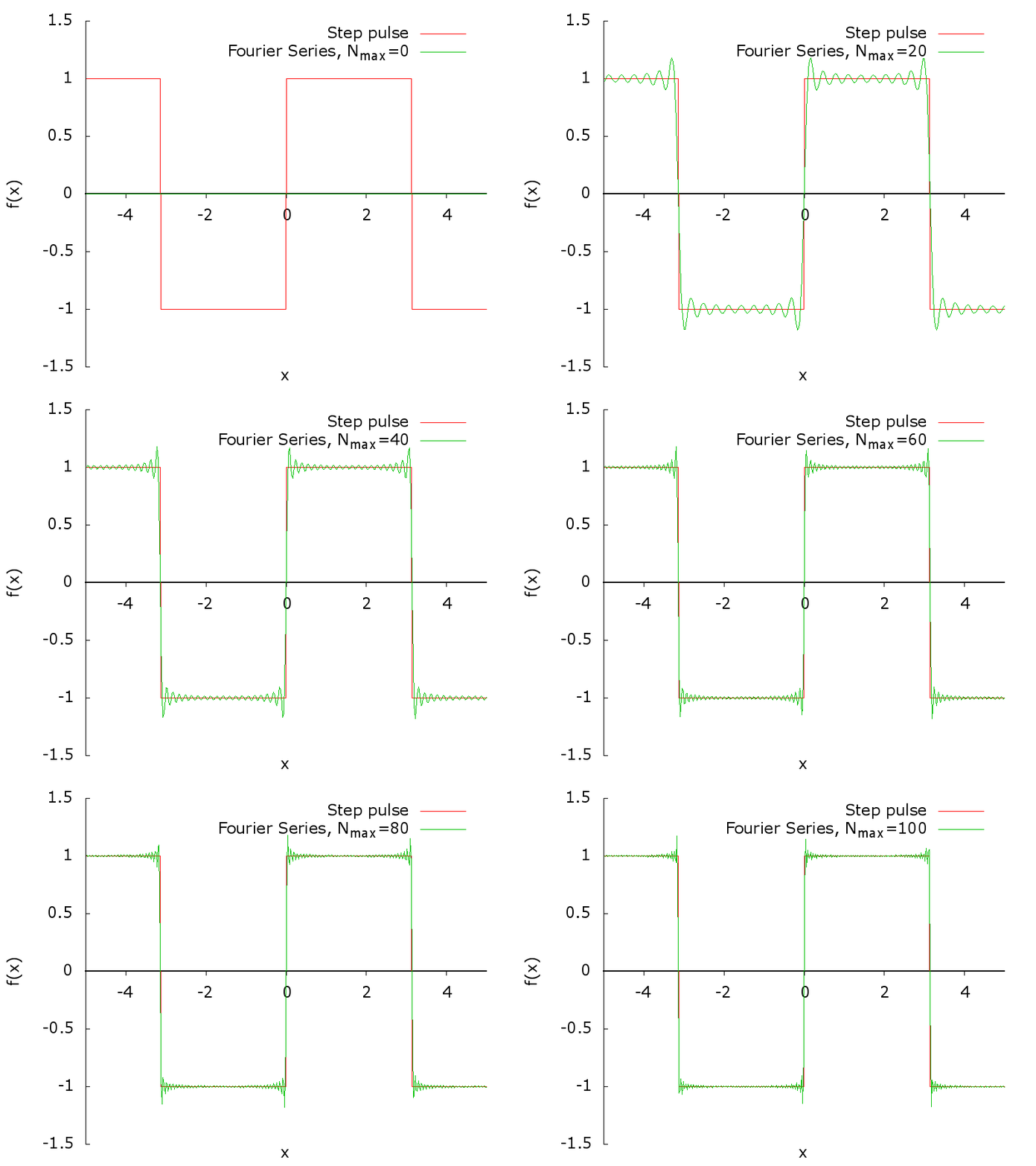
The overshoting oscillations in correspondence of the discontinuity of the square wave is called Gibbs phenomenon by W. Gibbs that pointed it out in a letter to Nature in 1899. The oscillation overshoot the function of a fixed amount that can be calculated. In addition, the function oscillate with an amplitude that is decreating going far from the discontinuity point.
Fourier Series using Complex Notation
Let 
![{[-L,L]}](https://s0.wp.com/latex.php?latex=%7B%5B-L%2CL%5D%7D&bg=ffffff&fg=444444&s=0&c=20201002)
![f(x)=\frac{a_0}{2}+\sum_{n=1}^{\infty} \left[ a_n\cos \frac{n\pi x}{L}+b_n\sin\frac{n\pi x}{L} \right] \ \ \ \ \ (10)](https://s0.wp.com/latex.php?latex=f%28x%29%3D%5Cfrac%7Ba_0%7D%7B2%7D%2B%5Csum_%7Bn%3D1%7D%5E%7B%5Cinfty%7D+%5Cleft%5B+a_n%5Ccos+%5Cfrac%7Bn%5Cpi+x%7D%7BL%7D%2Bb_n%5Csin%5Cfrac%7Bn%5Cpi+x%7D%7BL%7D+%5Cright%5D+%5C+%5C+%5C+%5C+%5C+%2810%29&bg=ffffff&fg=444444&s=0&c=20201002)
Using Euler’s identities:

where 
the Fourier series of

where


 daniloroccatano.blog
Pingback: Understanding the Discrete Fourier Transform in Signal Analysis |