I Metodi di Calcolo delle Cariche Atomiche basati sull’Elettronegatività. Parte I.

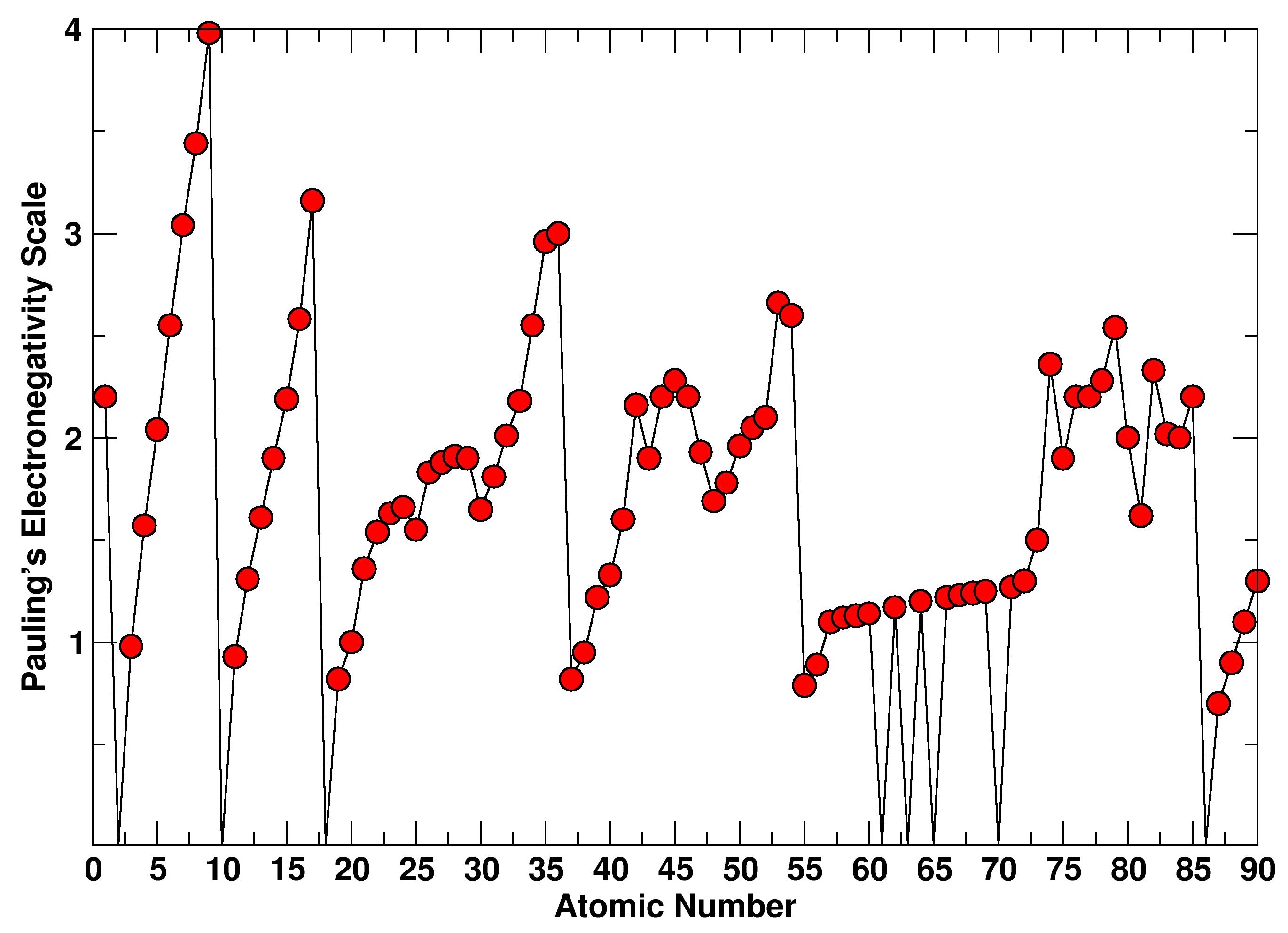
L’elettronegatività di un elemento chimico misura la tendenza di un atomo ad attrarre intorno a sé elettroni. Questa definizione fu formalizzata per la prima volta, in foma semi-empirica, dal chimico Linus Pauling all’inizio del 1930 ma era già stata proposta nella seconda metà dell’1800 dal chimico svedese Berzelius. Nelle molecole, questa tendenza determina la distribuzione elettronica molecolare e quindi influenza le proprietà molecolari quali per esempio, la distribuzione delle cariche parziali e la reattività chimica. Pauling ha fornito una scala di elettronegatività confrontando le energie di dissociazione di legame di coppie di atomi (A, B) usando la relazione

\chi_P=E_{AB}-\left(\frac{E_{AA}-E_{BB}}{2}\right)

con E_{AB}, E_{AA}, and E_{BB}, rispettivamente le energie di dissociazione delle molecole AB, AA, and BB.

Qualche anno dopo, nel 1934, Mulliken propose una definizione estesa di elettronegatività basata su proprietà atomiche misurabili spettroscopicamente, quali il potenziale di ionizzazione (I) e l’affinità elettronica (E):

\chi_M=\left(\frac{I-A}{2}\right)

Continue reading

Retro Programming Nostalgia V: Phase Plane of Autonomous Planar System of DE

What is the origin of the urge, the fascination that drives physicists, mathematicians, and presumably other scientists as well? Psychoanalysis suggests that it is sexual curiosity. You start by asking where little babies come from, one thing leads to another, and you find yourself preparing nitroglycerine or solving differential equations. This explanation is somewhat irritating, and therefore probably basically correct. David Ruelle, in Chance and Chaos

Here I am again for a new appointment with the Italian version of the column “Retro Programming Nostalgia“, my very own adventure in computer archaeology, rediscovering old programs written some time ago on microcomputers that have made their mark on an era.

This time, in my old floppy disks for the glorious Amiga 500, I found a program in Amiga Basic that I wrote during the early years of my university studies, when I was taking the course on differential equations II. Specifically, I was very fascinated by autonomous systems of differential equations due to their numerous applications in mathematical modeling of physical, chemical, and biological systems, as well as their importance in the theory of chaos. As in the series articles, I want to release an adapted version for the QB64 BASIC meta-compiler, but before presenting the program, I want to briefly explain what an autonomous system of differential equations is.

Continue reading

Retro Programming Nostalgia V: Sistemi Autonomi di Equazioni differenziali

“Qual è l’origine del desiderio, della fascinazione che spinge i fisici, i matematici e presumibilmente anche altri scienziati? La psicoanalisi suggerisce che si tratti di curiosità sessuale. Si comincia chiedendosi da dove vengano i bambini piccoli, una cosa porta all’altra e ci si ritrova a preparare il nitroglicerina o a risolvere equazioni differenziali. Questa spiegazione è un po’ irritante, e quindi probabilmente fondamentalmente corretta.” – David Ruelle, in “Chance and Chaos”

Eccomi di nuovo per un nuovo appuntamento con la versione in italiano della Rubrica “Retro Programming Nostalgia “, la mia personalissima avventura d’ archeologia informatica alla riscoperta di vecchi programmi scritti qualche tempo fa su microcomputers che hanno segnato un’epoca.

Questa volta, nei miei vecchi dischetti per il glorioso Amiga 500, ho trovato un programma in Amiga Basic che scrissi durante i primi anni dei miei studi universitari, quando studiavo nel corso di matematica II, i sistemi d’equazioni differenziali. In particolare, ero molto affascinato dai sistemi di equazioni differenziali autonomi per via delle molteplici applicazioni nella modellazione matematica di sistemi fisici, chimici e biologici, e per la loro importanza nella teoria del caos. Come negli articoli della serie, voglio rilasciare una versione riadattata per il meta compilatore QB64 BASIC, ma prima di presentare il programma, voglio brevemente spiegare cosa sia un sistema autonomo di equazioni differenziali.

Continue reading

Madelung定数の計算

To all Japanese-speaking readers, this text is part of an experiment using AI translation and WordPress. We kindly ask for your understanding and cooperation. If you find value in this initiative, please let us know. Additionally, if you notice any translation inaccuracies, we would greatly appreciate it if you could contact us. You can find the original text in English, Chinese, Italian, and German by clicking the links.

親愛なる日本語を話す読者の皆様へ、これはワードプレスを使用したAI翻訳の実験です。私の成長と改善にご協力いただければ幸いです。私の取り組みを評価していただける場合は、ぜひお知らせください。翻訳に誤りを見つけた場合は、修正するためにメッセージをお送りください。英語中国語イタリア語ドイツ語のオリジナルテキストは、リンクをクリックすることで見つけることができます。


以前の記事で、結晶の格子エネルギーにおける静電エネルギー項の計算について説明しました。この記事では、この項を計算する方法について詳しく説明し、また単純なイオン系におけるこの項の値を提供します。

晶体の総クーロン相互作用エネルギーは、個々の相互作用項の合計として与えられます。

\displaystyle V_{AB} = \frac{e^2}{4\pi \epsilon_0} \frac{Z_AZ_B}{r_{AB}} \hfill (1)

固体の結晶構造では、電荷qAとqBを持つイオン対の間の距離rABによって生じるクーロン相互作用力で構成されます。この和は、固体中のすべてのイオン対にわたって計算されます。

最初の近傍は負の重要な寄与を提供するため、この和は非常に遅く収束します。2番目の近傍原子はわずかに弱い正の項を生成します。このプロセスは無限遠まで続き、交互の符号でますます小さい値を通じて行われます。このようにして、陽イオンと陰イオンの間の引力が主導し、固体のエネルギーに有益な負の寄与を提供します。

Continue reading

The shell of a snail and its 3D Digitization with the Structure-from-Motion algorithm

To grass, or leaf, or fruit, or wall,
The snail sticks close, nor fears to fall,
As if he grew there, house and all
                                                 Together.
Within that house secure he hides,
When danger imminent betides
Of storm, or other harm besides
                                                Of weather.
Give but his horns the slightest touch,
His self-collecting power is such,
He shrinks into his house, with much
                                                Displeasure.
Where’er he dwells, he dwells alone,
Except himself has chattels none,
Well satisfied to be his own
                                             Whole treasure.
Thus, hermit-like, his life he leads,
Nor partner of his banquet needs,
And if he meets one, only feeds
                                                The faster.
Who seeks him must be worse than blind,
(He and his house are so combin’d)
If, finding it, he fails to find
                                                Its master.

The Snail by William Cowper (1731-1800)

Introduzione

The beautiful poetry of Cowper expresses the pleasant charm that this small inhabitant of our gardens instills. I have always been fascinated by this gastropod, to the point that it was one of my favorite invertebrates for my amateur naturalistic observations. Furthermore, I still recall with pleasure and nostalgia the collection of those called ‘ciammaruchelle‘ in the Ciociaro dialect, which are small snails. These were gathered by the handful in the wheat fields after the harvest. It was one of the various culinary traditions that involved my entire family every year and were carried out with constant devotion. The collection was organized with careful timing, locations, and weather conditions to increase the likelihood of success. Usually, we would return home with a rich and tasty haul, but not without difficulties, as the little snails would climb onto the thistle plants (Cynara cardunculus L., 1753) where they would hide among the thorns to protect themselves from predators. Unfortunately for them, the predator Homo Sapiens Sapiens Frusinenses, equipped with keen eyesight and great tenacity, did not easily give up its prey!

The collected species was a variety of the snail Eobania vermiculata, commonly known as “rigatella,” which is very common in Mediterranean regions. The snails were gathered in woven baskets and, once back home, they were enclosed in circular cages with fine mesh walls for several days to purge their intestines. They were then cooked for a few hours in a tomato base spiced with mint (Clinopodium nepeta), following an ancient recipe. The dish was consumed with fresh or, even better, baked bread to make it crispy. It was a vibrant celebration of scents, flavors, and colors, with the sound of slurping as they tried to empty the succulent contents of their shells. A delicate feast of aromas and flavors: the scent of tomato infused with snail meat and mint, combined with the red color of the snails’ shells adorned with white-brown stripes.

Continue reading

Exploring Photoelasticity of Plastic Materials with the MLT

In the recent Instructable project Introducing the Mini LED Table: Compact, Affordable, and Enhanced With Computer Vision, we presented an inexpensive, compact, and easy-to-build Mini LED Table (MLT) that is a simple and cost-effective project for a STEM activity and a tool for educational purposes. Among other applications, The device can open doors for students and educators to explore the fascinating world of material science and engineering by providing an affordable and compact solution.

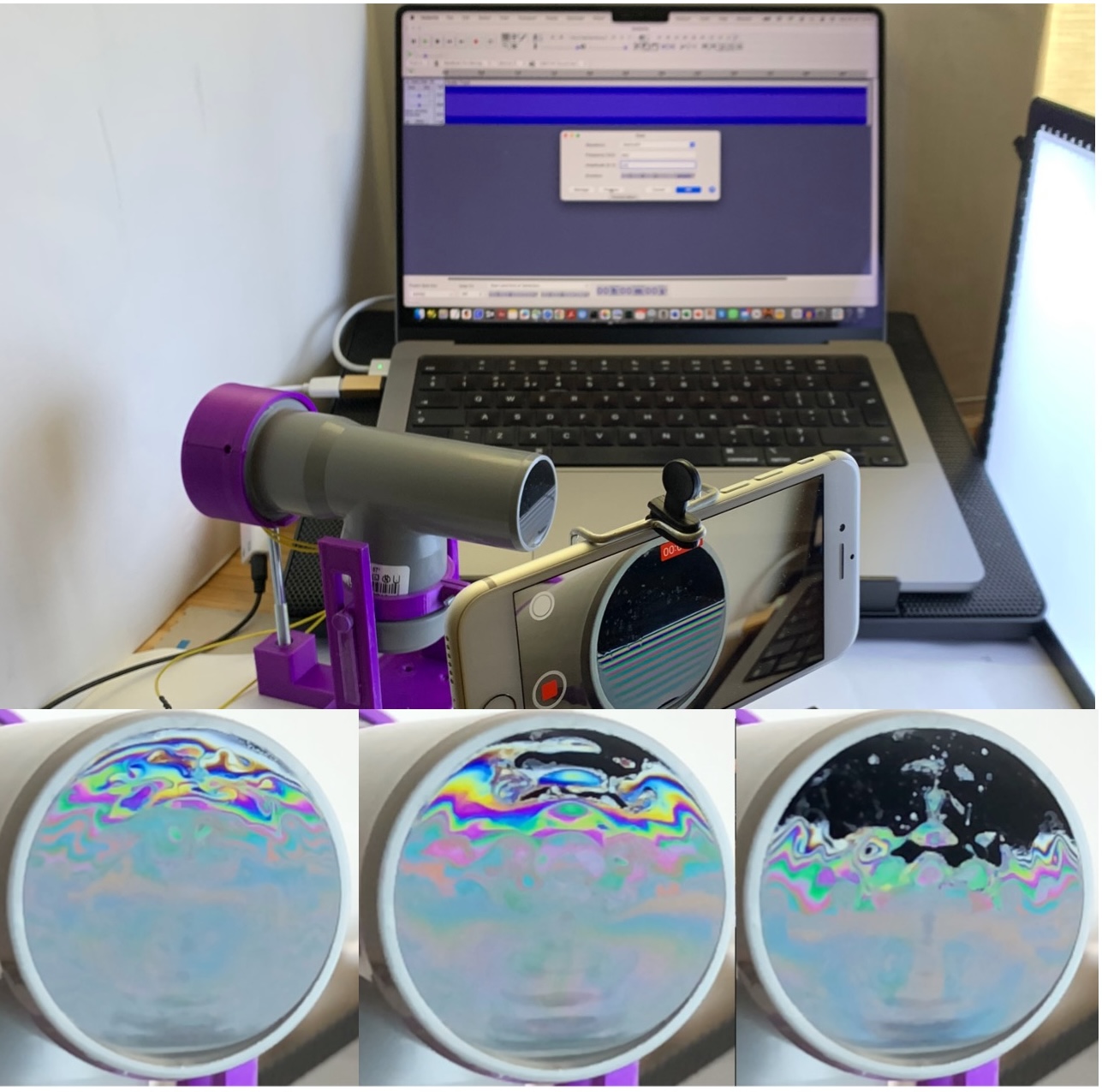
In a new project on the Instructables website, I have extended the capability of the MLT by adding a device that uses polarizer filters in front of the Picamera, which will provide the capability to visualize the internal stress distribution within transparent materials. These stress patterns due to the birefringence of some materials are paramount for engineering analysis. They are significant in determining various substances’ mechanical behavior and structural integrity. 

To address this possible application, we will explain how to add a polarizer to the MLT, which is already equipped with computer vision capabilities. In short, the accessory consists in adding a removable polarizer filter onto the Mini LED Table and incorporating another polarizer near the Picamera mounted on a rotatable 3D support enabling the visualization and analysis of colorful stress patterns that arise in transparent plastic and other materials exhibiting photoelastic effects.

By harnessing the capabilities of MLT, polarized light, and computer vision integration, we want to provide educators and students with a powerful tool for visualizing and understanding the intricate stress patterns present in transparent plastics and other photoelastic materials.

Before delving into the details of the project, let us provide a brief overview of photoelasticity and its significance in engineering. Photoelasticity is a powerful technique used to analyze the stress distribution in materials. It is based on the principle that the refractive index of a photoelastic material changes with applied stress. By passing polarized light through a stressed material and analyzing the resulting fringe patterns, engineers can gain valuable insights into the stress distribution and behavior of the material under various loading conditions.

Photoelasticity finds extensive applications in engineering. It aids in designing and analyzing components subjected to complex stress states, such as structural components, machine parts, and even optical devices. By visualizing stress concentrations, engineers can optimize designs, identify potential failure points, and enhance various systems’ overall reliability and performance. Additionally, photoelasticity plays a crucial role in material testing, prototype validation, and quality control processes, enabling engineers to ensure the integrity and safety of critical components.

Unveiling Stardust on Your Rooftop: a Magnetic Microparticle Sorter and Spotter

With the help of my lovely assistant, we have just published on Instructables another STEM project. This time, it was inspired by the reading of the classic Comets by Carl Sagan and the upcoming period of significant meteor shower events of the year:

  1. Perseids: The Perseids is one of the most popular and reliable meteor showers, occurring annually in mid-August. It is associated with the comet Swift-Tuttle and gets its name from the constellation Perseus, from where the meteors appear to radiate. The Perseids are known for their fast and bright meteors, often leaving long-lasting trails in the sky. They are visible from both hemispheres, but the best viewing opportunities are typically in the northern hemisphere. During its peak, the Perseids can produce up to 60 to 100 meteors per hour.
  2. Geminids: The Geminids meteor shower takes place every December and is considered one of the most reliable and prolific meteor showers of the year. The Geminids are associated with the asteroid 3200 Phaethon and appear to radiate from the constellation Gemini, hence their name. Unlike many other meteor showers, the Geminids can be observed from both the northern and southern hemispheres. They are known for producing bright, colorful meteors and can reach a peak rate of 120 to 160 meteors per hour, making them a spectacular astronomical event.
  3. Quadrantids: The Quadrantids meteor shower occurs annually in early January and is known for its brief but intense display of meteors. The radiant point of the Quadrantids lies in the defunct constellation Quadrans Muralis, which is no longer recognized as a constellation. However, the meteors can be seen anywhere in the sky. The Quadrantids are associated with the asteroid 2003 EH1, which is believed to be an extinct comet. The peak of the Quadrantids is relatively short, usually lasting only a few hours, but it can produce a high meteor rate of around 60 to 200 meteors per hour.

Who won’t be thrilled by capturing a piece of outer space right in your hands? However, you might think, “But I don’t have the necessary equipment!” Fear not, as luck would have it, you’ve stumbled upon this instructable that will guide you in creating your own Micrometeorite Separator and Spotter (MSS).

Sure, it’s true that if a magnificent carbonaceous chondrite were to gracefully land right in front of your doorstep, you wouldn’t need any equipment. However, chances are high that tiny fragments of meteorites, resembling specks of falling stars, are scattered on your rooftop, waiting to be discovered. Countless websites and YouTube videos share fascinating tales of those who have embarked on this labor of love, showcasing the patience and dedication required to uncover these elusive cosmic treasures. The meteorites you’re after are microscopic, so your search will focus on distinguishing them from the terrestrial dust and debris that pervade our surroundings.

Fortunately, a small and mighty Neodymium magnet proves invaluable in this pursuit, especially for isolating metallic meteorites. Yet, be prepared for a challenging quest, as finding these little celestial gems is no easy task. However, the rewards of discovering even a single meteorite are genuinely remarkable.

We have recently published an Instructable project presenting a simple yet effective device to aid you in your meteorite discovery journey. This device remains compact and portable that can be used with a digital microscope or fitted under a stereomicroscope and the wonders they reveal.

So, get ready to embark on an extraordinary adventure and immerse yourself in the captivating world of meteorite hunting. With the Micrometeorite Separator and Spotter (MSS) at your disposal, you’ll be equipped to explore the heavens and unveil the hidden secrets within the depths of our vast universe.

Happy hunting, and do not forget to like this post and the Instructable !

Introducing the Mini LED Table: Compact, Affordable, and Enhanced With Computer Vision

How many times have you found yourself looking at your cake decorations, wondering how many pearls are left in the box? Have you ever tried to count how many mustard, basil or pepper plants you can grow with the seeds you have in stock? And what about the urge to know the exact number of millimeter stainless steel balls you recently purchased at your favorite DIY store?
For this purpose, some scrap cardboard, a strip of LEDs, and a Raspberry Pi Zero with its tiny chamber might help satisfy your mathematical desire to enumerate these tiny objects.
In a recent article on Instructables, we detailed the eye-opening experience with all the construction details of a compact, battery-powered, easy-to-use, and affordable mini LED table (MTL). In addition to the hardware, an open source software based on OpenCv is also strengthened for the acquisition and simple processing of the images of the objects on the MTL for possible applications.

Continue reading

Il Mini Tavolo LED: Illumina l’Universo dei Dettagli Nascosti!

Quante volte ti sei trovato a guardare le tue decorazioni per i dolci, chiedendoti quante perle rimangono nella scatola? Hai mai provato a contare quante piante di senape, basilico o pepe puoi coltivare con i semi che hai in magazzino? E cosa dire dell’urgenza di conoscere il numero esatto delle sfere in acciaio inossidabile da un millimetro che hai recentemente acquistato nel tuo negozio di fai-da-te preferito?
Per questo scopo, un po’ di cartone di recupero, una striscia di LED e un Raspberry Pi Zero con la sua piccola camera potrebbero aiutare a soddisfare il tuo desiderio matematico di enumerare questi oggetti minuscoli.
In un recente articolo su Instructables, abbiamo descritto l’ illuminante esperienza con tutti i dettagli costruttivi di un mini tavolo LED (MTL) compatto, alimentato a batteria, facile da usare e conveniente. Oltre all’hardware viene fortito anche un software opensource basato su OpenCv per l’acquisizione e la semplice elaborazione delle immagini degli oggetti sul MTL per possibili applicazioni.

Caratteristiche principali del progetto:

  • Un tavolo a LED compatto, portatile ed economico realizzato con un foglio di cartone di imballaggio e una striscia di LED bianchi.
  • Può essere alimentato alimentato da una batteria elettrica e ha un dimmer per regolare l’intensità della luce.
  • È dotato di una camera Raspberry Pi per acquisire le immagini (con la distanza focale modificata per mettere a fuoco oggetti vicini).
  • Il software in Python fornito come OpenSource consente di controllare la camera e di elaborare le immagini per contare gli oggetti sul tavolo.

L’articolo originale (in inglese) del MTL si trova sul mio sito Instructables.

L’articolo contiene le istruzioni dettagliate e i file STL per la stampa 3D dei componenti necessari. Il progetto è stato realizzato in collaborazione con i miei due cari collaboratori, in particolare Leonardo. È un progetto semplice e accessibile che può essere utilizzato anche a scopo educativo per imparare concetti di costruzione, elettronica, ottica e programmazione.

Retro programming Nostalgia IV: Acid/Base Equilibrium and Titration (Part I)

The motivation for this article stems from my interest in retro-computing connected, on the one hand, to the re-evaluation of my youthful explorations of scientific computing in the BASIC language and, on the other, to the popularity they are having in the amateur sector in recent years and of teaching, single-board microcomputers (single-board computers, such as, for example, the Raspberry Pi). These small computers have considerably more power at a much lower cost than the microcomputers of the 80s. This made it possible to emulate the operating systems of the legendary Commodore home computer models and the MSX extension on these computers.

Therefore, a renewed interest in the BASIC programming language is also occurring. This interest in retro-computing reflects the nostalgia for the great emotions that the development of consumer information technology brought to my generation in the 1970s and 1980s. I remember being so struck by the creativity in using and programming these microcomputers that it redirected my scientific interests and academic career. I have written in other articles about my first programming adventures with Commodore home computers and MSX systems in the late 80s and early 90s and my rediscoveries in computer archaeology. Among the exhibits, I found a small program I used to study acid/base titrations developed in MSX BASIC. Therefore, I took the opportunity to write notes on acid-base balance and titration and thus provide a restored and improved version of my program to students passionate about programming and grappling with this important concept of analytical chemistry.

Continue reading