The Smoluchowski diffusion equation describes the time evolution of the probability density function (PDF) of a particle undergoing overdamped Brownian motion in a potential energy landscape. It is a central equation in statistical mechanics, soft matter physics, and chemical physics.
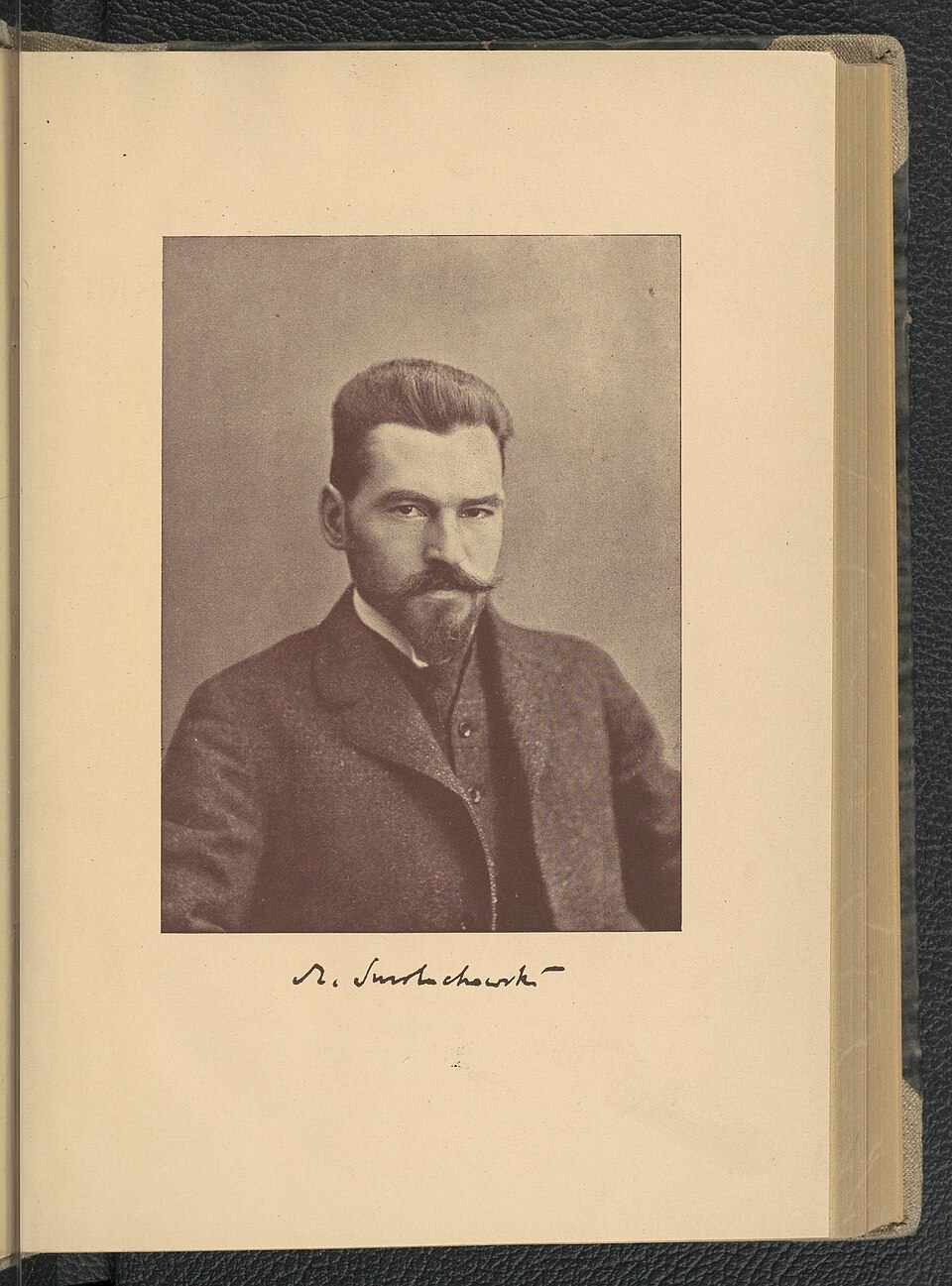
Its origins trace back to the early 20th century, in the context of the theoretical understanding of Brownian motion. Following the seminal work of Albert Einstein in 1905, who provided a statistical description of diffusion and established a quantitative link between microscopic fluctuations and macroscopic transport, further developments aimed to incorporate external forces and interactions. In 1916, Marian Smoluchowski extended Einstein’s framework by considering particles subjected to systematic forces arising from a potential field. His formulation led to what is now known as the Smoluchowski equation, effectively describing diffusion in the overdamped (high-friction) limit where inertial effects can be neglected. This marked a crucial step toward connecting stochastic motion with deterministic drift. A complementary perspective emerged through the work of Paul Langevin (1908), who introduced a stochastic differential equation for particle motion, explicitly incorporating random forces. The equivalence between the Langevin description and the corresponding evolution equation for probability densities—later formalized as the Fokker–Planck equation—provided a deep and unifying framework. The general mathematical structure of such evolution equations was further clarified by Adriaan Fokker and Max Planck in the early 20th century, leading to the modern formulation of the Fokker–Planck equation. The Smoluchowski equation can be viewed as a specific limit of this more general framework. Later, in the 1940s, Hendrik Anthony Kramers applied these ideas to chemical reaction rates, analyzing barrier crossing in potential landscapes. His work revealed how transition rates depend exponentially on the energy barrier height, establishing the foundation of what is now known as Kramers’ theory—an essential concept for understanding metastability and rare events.
In this article, we consider the one-dimensional (1D) case, where a particle moves along a coordinate 


 daniloroccatano.blog