RaPenduLa: Una Video piattaforma FaiDa Te Per Studiare Oscillazioni Meccaniche

Qualche giorno fa ho pubblicato un nuovo progetto educativo sul mio sito Instructables. Il dispositivo, che ho battezzato RaPenduLa (dalle iniziali in inglese di RaspPi Pendulum Laboratory), è stato ribattezzato in italiano CAMPO (Computer Analisi Moto Pendolare Oscillante) grazie a un suggerimento di ChatGPT. Ma, come direbbe Shakespeare, ‘What’s in a name? That which we call a rose by any other name would smell as sweet’: il cuore del progetto è infatti una piattaforma video per lo studio delle oscillazioni meccaniche. Utilizzando un Raspberry Pi Zero W2 dotato di modulo fotocamera, il sistema registra ad alta velocità il movimento dei pendoli. Poi, con un’analisi video basata su Python e OpenCV, RaPenduLa è in grado di tracciare il percorso preciso della punta del pendolo, visualizzandone il comportamento oscillatorio in 2D.

Continue reading

RaPenduLa: A DIY Video Platform for Exploring Mechanical Oscillations

I have recently published another educational project on my Instructables website. I called the device RaPenduLa for the RaspPi Pendulum Laboratory, and it is a video platform for studying mechanical oscillations. It uses a Raspberry Pi Zero W2 equipped with a camera module to record the motion of pendulums in high speed. The interesting part happens through video analysis: using Python and the fantastic OpenCV library, RaPenduLa can track the precise path of a pendulum’s tip and help visualize its oscillatory behavior in two dimensions.

Continue reading

Easter 2025: Exploring Egg-Shaped Billiards

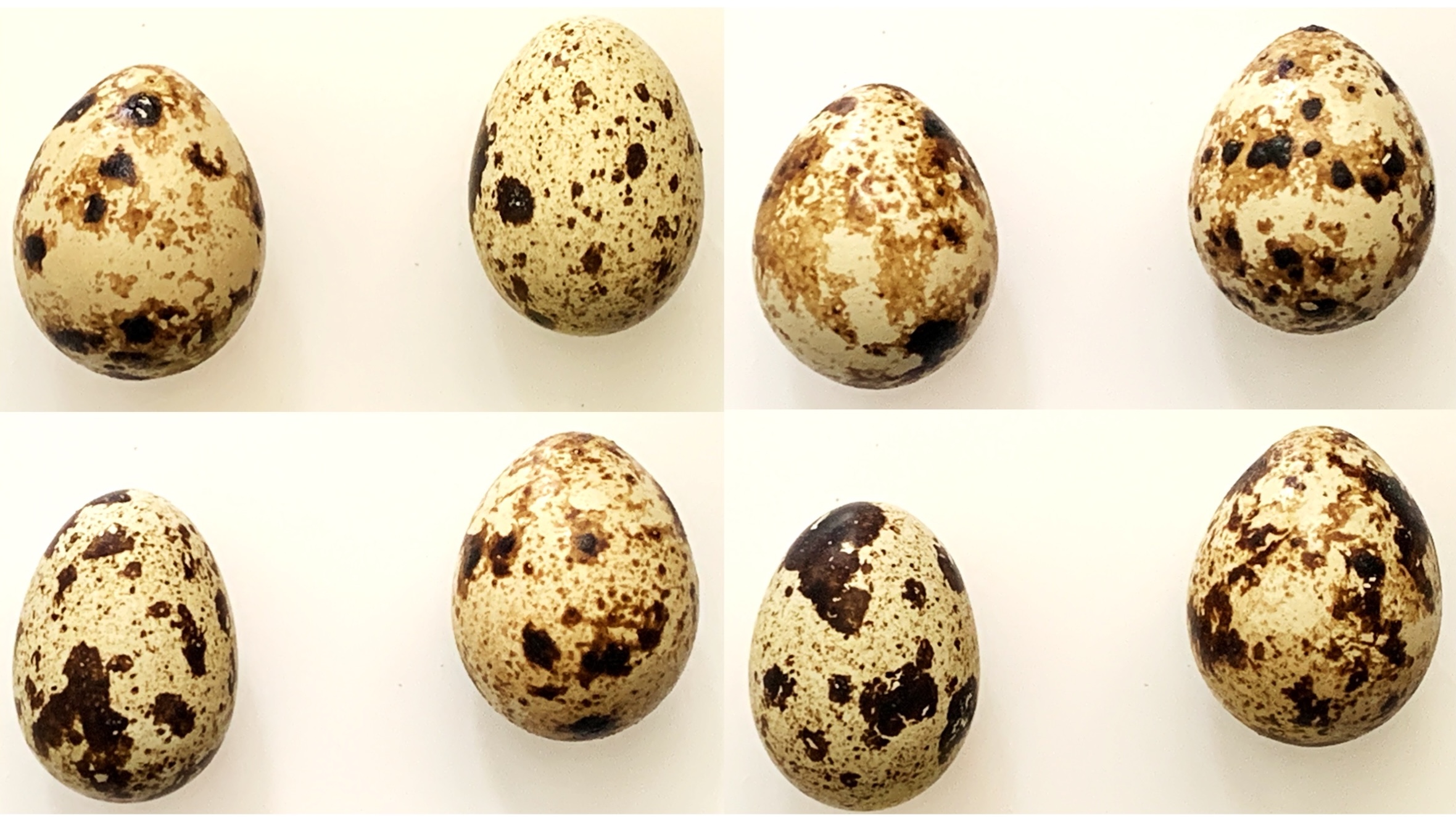
It has become a recurrent habit for me to write a blog on the shape of eggs to wish you a Happy Easter. Not repeating oneself and finding a new interesting topic is a brainstorming exercise of lateral thinking and a systematic search in literature to find an interesting connection. This year, I wanted to explore an idea that has been lurching in my mind for some time for other reasons: billiards.

I used to play snooker from time to time with some old friends. I am a far cry from being even an amateur in the billiard games, but I had a lot of fun verifying the laws of mechanics on a green table. I soon discovered that studying the dynamics of bouncing collision of an ideal cue ball in billiards of different shapes keeps brilliant mathematicians and physicists engaged in recreational academic studies and important theoretical implications.

Continue reading

Season’s Greetings with Diffusion-Limited Aggregation!


As the year comes to a close, let us take a moment to reflect on the beauty of nature and the profound patterns that can arise from simple rules. Inspired by the Diffusion-Limited Aggregation (DLA) simulation—a concept that creates mesmerizing structures from chaotic randomness—we find parallels between its patterns and the essence of the holiday season.

The animation featured here was created using my DLA simulator, written in Awk, my favorite programming language. This program simulates the deposition of randomly diffusing particles in two dimensions. In this case, it mimics the formation of snowflakes or coriander-like clusters, with particles meandering through randomness to form intricate fractal structures.

These patterns remind us how small, individual efforts can come together to create something extraordinary. Be it family gatherings, acts of kindness, or moments of generosity, each step contributes to a larger, beautiful picture—much like how particles aggregate to form stunning natural structures such as snowflakes, coral reefs, or mineral deposits.

Wishing You:

🎄 Fractal Joy: Let your happiness grow in beautiful and unexpected ways.

🌟 Boundless Creativity: Like the Moore and von Neumann neighborhoods in the simulation, embrace different perspectives to expand your horizons.

❄️ Peace and Harmony: May your life’s matrix be filled with meaningful connections and serene moments.

May your holidays be filled with love, joy, and wonder — and may your 2024 be as inspiring as the intricate patterns of life itself!

Happy Holidays! 🌟

Look at the Rainbow in a Soap Film: An Instructable Project

My heart leaps up when I behold 
   A rainbow in the sky:
So was it when my life began; 
So is it now I am a man; 
So be it when I shall grow old, 
   Or let me die!
The Child is father of the Man;
And I could wish my days to be
Bound each to each by natural piety.

William Wordsworth, March 26, 1802


I couldn’t resist citing the beautiful poetry by Wordsworth about the rainbow to introduce my new Instructable, ‘Explore the Physics of Soap Films with the SoapFilmScope.’ I got the idea for this project by reading an article by Gaulon et al. [1]. The authors describe in detail the use of soap film as an educational aid to explore interesting effects in the fluid dynamics of this system. In particular, they examine the impact of acoustic waves on the unique optical properties of the film. In this Instructable, we have designed a device called the SoapFilmScope to perform these experiments. This tutorial will guide you through the process of creating this device, showcasing the mesmerizing interaction between sound waves and liquid membranes. The SoapFilmScope offers an engaging way to explore the physics of acoustics, light interference, and fluid dynamics.

When a sound wave travels through the tube and vibrates the soap film, it creates dynamic patterns through several fascinating mechanisms:

The device consists of a vertical soap film delicately suspended at the end of a tube obtained from a PVC T-shaped fitting that you can get from any DIY store. By attaching a small inexpensive speaker to it, you can let the film dance to the rhythm of the music.

Continue reading

Retro Programming Nostalgia VI: Exploring the Hyperspace

Henk Rogers: Um, I like Pascal. Assembler is my go-to. But never underestimate…
Alexey Pajitnov: …the power of BASIC.

From the movie Tetris (2023).

It has been a long while that I wanted to write this article. The usual motivation is to propose another of my BASIC programming explorations performed in the 80s on my Philips MSX VG-8010 and Amiga 500 microcomputer. The exploration was encouraged by the reading of another of the brilliant articles by A. K. Dewdney in his column “Ricreazioni al Calcolatore” (Computer Recreation) of Le Scienze, the edition in Italian of Scientific American [1]. Dewdney’s article was inspired by the beautiful book by Thomas F. Banchoff [2] who pioneered in the early 1990s the study using computer graphics of hyperdimensional objects.

Continue reading

Easter 2024: Dinosaur Eggs, Kinder Surprise, Drug Capsules, Jumping Beans Toy and Retro programming

Oh my God. Do you know what this is? This is a dinosaur egg. The dinosaurs are breeding.

Dr. Alan Grant, Jurassic Park movie (1993)

We are again approaching Easter time and, as tradition, I would like to celebrate with an article dedicated to the most perfect thing in nature: the egg. I came across interesting books about the discovery of dinosaur eggs last year. Dinosaurs are the ancestors of birds and modern reptiles, so we will take a little detour from the traditional Easter egg, and with the spirit of equal opportunity justice, we will look at the shape of these.

Continue reading

El cálculo de la constante de Madelung

To all the Spanish-speaking readers, this is an AI-assisted translation experiment using WordPress. Please bear with me as my knowledge of the Spanish language is limited, so I cannot detect possible incorrect translations of the original test in Italiano. If you appreciate my efforts, please let me know. If you notice any errors in the translation, please send me a message to correct them. You can find my original versions in EnglishItalian, and German  language of this text by clicking the links.

Estimados lectores de habla hispana, este es un experimento de traducción asistida por IA utilizando WordPress. Les pido paciencia ya que mi conocimiento del idioma español es limitado, por lo que no puedo detectar posibles traducciones incorrectas del texto original en italiano. Si aprecian mis esfuerzos, por favor háganmelo saber. Si notan algún error en la traducción, por favor envíenme un mensaje para corregirlo. Pueden encontrar las versiones originales en inglés, italiano y alemán de este texto haciendo clic en los enlaces.

Continue reading

Methods of Calculating Atomic Charges based on Electronegativity. Part I.

The electronegativity of a chemical element measures the tendency of an atom to attract electrons around it. This definition was formalized for the first time, in a semi-empirical form, by the chemist Linus Pauling in the early 1930s, but it had already been proposed in the late 1800s by the Swedish chemist Berzelius. In molecules, this tendency determines the molecular electronic distribution and therefore influences molecular properties such as the distribution of partial charges and chemical reactivity. Pauling provided an electronegativity scale by comparing bond dissociation energies of pairs of atoms (A, B) using the equation

\chi_P=E_{AB}-\left(\frac{E_{AA}-E_{BB}}{2}\right)

With $E_{AB}$, $E_{AA}$, and $E_{BB}$ being the dissociation energies of the molecules AB, AA, and BB, respectively.

A few years later, in 1934, Mulliken proposed an expanded definition of electronegativity based on spectroscopically measurable atomic properties such as ionization potential (I) and electron affinity (E):

\chi_M=\left(\frac{I-A}{2}\right)

Continue reading

I Metodi di Calcolo delle Cariche Atomiche basati sull’Elettronegatività. Parte I.

L’elettronegatività di un elemento chimico misura la tendenza di un atomo ad attrarre intorno a sé elettroni. Questa definizione fu formalizzata per la prima volta, in foma semi-empirica, dal chimico Linus Pauling all’inizio del 1930 ma era già stata proposta nella seconda metà dell’1800 dal chimico svedese Berzelius. Nelle molecole, questa tendenza determina la distribuzione elettronica molecolare e quindi influenza le proprietà molecolari quali per esempio, la distribuzione delle cariche parziali e la reattività chimica. Pauling ha fornito una scala di elettronegatività confrontando le energie di dissociazione di legame di coppie di atomi (A, B) usando la relazione

\chi_P=E_{AB}-\left(\frac{E_{AA}-E_{BB}}{2}\right)

con E_{AB}, E_{AA}, and E_{BB}, rispettivamente le energie di dissociazione delle molecole AB, AA, and BB.

Qualche anno dopo, nel 1934, Mulliken propose una definizione estesa di elettronegatività basata su proprietà atomiche misurabili spettroscopicamente, quali il potenziale di ionizzazione (I) e l’affinità elettronica (E):

\chi_M=\left(\frac{I-A}{2}\right)

Continue reading