What if an antique scientific instrument could be reimagined to inspire modern classrooms, foster creativity, and even be used to create form of dynamic art ? Meet the KaleidoPhoneScope, a contemporary twist on Wheatstone’s classic Kaleidophone [1]. By integrating 3D printing, laser technology, and microcomputers, this revamped device transforms the teaching of physics, engineering, and even mathematics into an engaging and interactive experience.

Figure 1: The KaleidoPhoneScope. A) Diagram of the KaleidophoneScope with indications of the different parts described in the text. B) Photo of the final apparatus with the horizontal cantilever wire. C) variant with the all-flexible Γ wire.
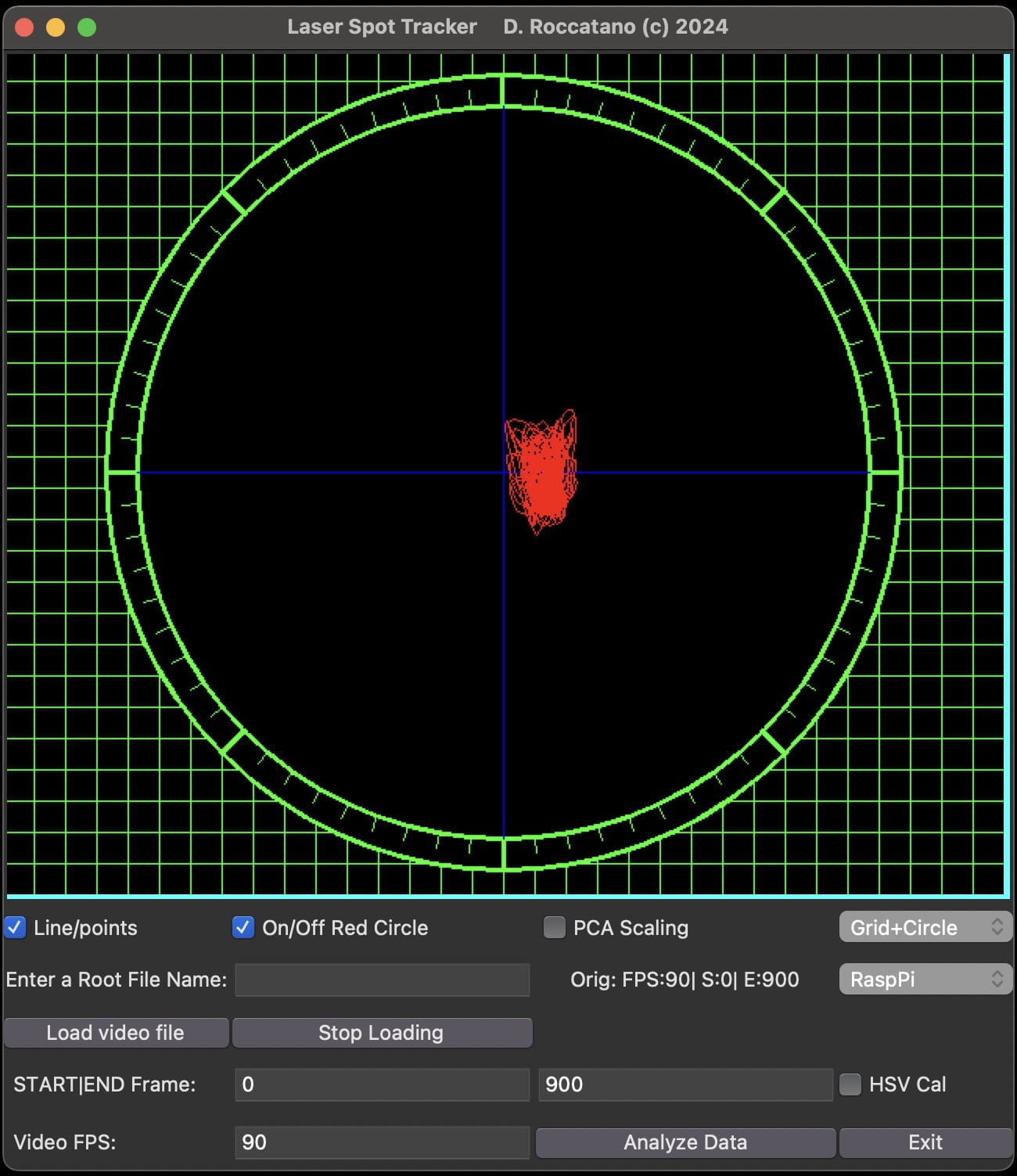
Figure 2: Graphical user interface of the Laser Spot Tracker program. The upper panel displays the
results of the analysis from a video recorded with the Raspberry Pi camera at 90 frames per second.
The laser spot trajectory is represented by the red line, and a red circle indicates the position of
the last spot. In the bottom input panel, the first and last frame indexes used for the analysis are
shown.
A 21st-Century Makeover
The KaleidoPhoneScope combines cost-effective materials and modern technology for accessibility and impact. Built with 3D-printed components, a laser module, and a Raspberry Pi microcomputer, this device doesn’t just demonstrate physics concepts—it invites exploration. A custom Python program captures video and analyzes data, making the KaleidoPhoneScope a powerful tool for harmonic oscillations, waveforms, and material elasticity studies.
Through experiments and Fourier analysis, the KaleidoPhoneScope uncovers fascinating insights about vibrational modes in various wire configurations:
• Cantilever dynamics reflect the fundamental vibrations dictated by material properties.
• Comparing horizontal cantilevers with Γ-shaped wires highlights how geometry affects vibrational behavior.
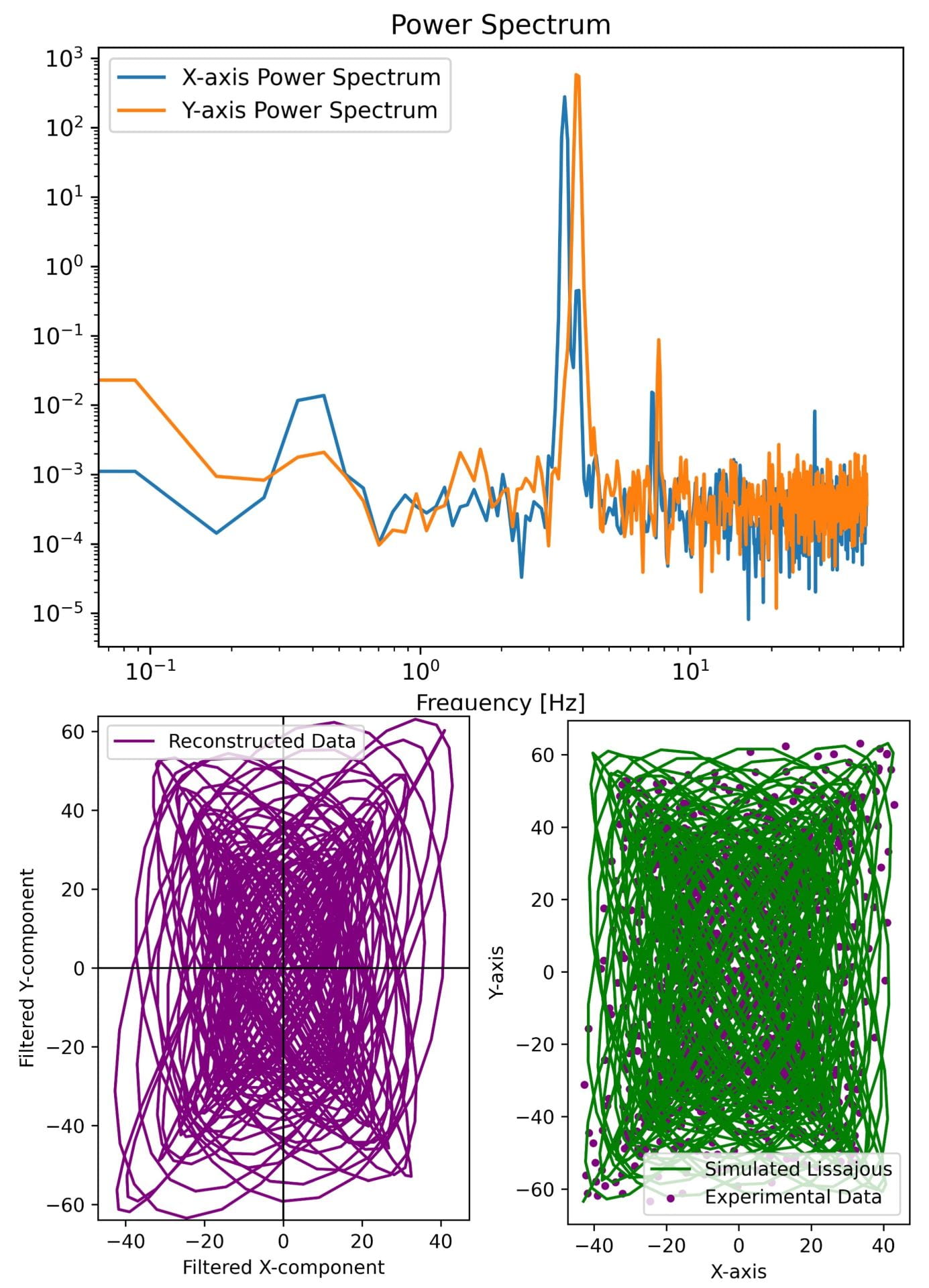
Figure 3: The top graph shows the power spectra obtained from the analysis of the horizontal wire
cantilever’s vibration, with a linear abscissa to highlight the relevant system frequencies. The left
bottom graph shows the filtered trajectory and the one on the left the comparison with the theoretical
model of damped LB curves.
These findings emphasize that tailoring analytical methods to physical systems is critical—an invaluable lesson for students and engineers alike.
Beyond Physics: A Multidisciplinary Tool
The KaleidoPhoneScope doesn’t stop at physics. Its visually striking LB curves serve as a gateway to discussing mathematical principles, such as ratios, proportions, and parametric equations. Students gain a deeper appreciation of the connections between geometry, mathematics, and physical motion [2].
Hands-On Learning and STEM Skill Development
One of the standout features of this project is its ability to engage students actively. By building and fine-tuning the KaleidoPhoneScope, students develop skills in teamwork, problem-solving, and iterative design. Exploring different materials and parameters fosters innovation, while experimenting with the Python program encourages programming and analytical skill-building. The KaleidoPhoneScope’s applications extend beyond the classroom. Educators can organize community outreach programs where students showcase their projects to local schools or science enthusiasts. These events promote STEM education, inspire curiosity, and allow students to practice science communication by explaining the principles behind their work.
Beyond its educational impact, the KaleidoPhoneScope has artistic potential. Its dynamic patterns could enhance museum exhibits, science centers, or even art galleries. Imagine interactive installations at science fairs where participants control parameters like frequency and amplitude, creating real-time pattern changes—a captivating fusion of science and art.
Why It Matters
The KaleidoPhoneScope exemplifies the power of reimagining traditional tools for modern purposes. It brings STEM concepts to life in visually compelling ways, fosters hands-on learning, and bridges disciplines from science to art. Whether in a classroom, a science outreach event, or an art installation, the KaleidoPhoneScope inspires curiosity and creativity, proving that sometimes, old devices really can learn new tricks.
REFERENCE
- Roccatano D. The KaleidoPhoneScope: new tricks for an old device.Giornale di Fisica, 65 (3), Luglio-Settembre, 315-334, (2024).
- Roccatano D., ”The Kaleidophonescope: a dance of light, sounds and mathematics.” https://www.instructables.com/The-KaleidoPhoneScope-a-Dance-of-Light-Sounds-and-
- Roccatano D., ”The Lissajous-bowditch curves.”

 daniloroccatano.blog